The Neuroscience Behind Stress and Anxiety
28 April 2026
Let’s face it – stress and anxiety are like those uninvited guests who crash your party and then refuse to leave. We’ve all felt that tight chest, racing heart, or the overwhelming cloud of thoughts that spiral out of control. But have you ever wondered what's actually going on in your brain when this happens?
Well, buckle up. We're diving headfirst into the fascinating (and sometimes frightening) world of brain chemistry, neural circuits, and hormone surges that rule our emotional states. Get ready to uncover the science that powers every panic attack, every sweaty palm, and every sleepless night spent overthinking.

What Exactly Is Stress and Anxiety?
Before we open up the neurological toolbox, let’s clear the air.Stress is your body’s reaction to a perceived threat or challenge. You could think of it as your internal fire alarm that goes off when something doesn’t feel quite right.
Anxiety, on the other hand, is what happens when that alarm won't shut off—even when there’s no fire. It’s more about fear of what might happen, not what’s happening right now.
While stress can sometimes be helpful (hello, adrenaline boost before a big meeting), chronic stress and anxiety mess with your brain in ways that aren’t pretty.

The Brain on Stress: Who’s Running the Show?
Let’s break it down and meet the major players in your brain’s stress response system.🧠 The Amygdala – Your Fear Radar
Think of the amygdala as your brain's smoke detector. This almond-shaped structure picks up on danger and sends out the "Something's wrong!" signal. It’s hyper-alert and super-fast, but here’s the kicker—it’s not great at fact-checking.Walk into a room full of strangers and feel immediate dread? That’s your amygdala hitting the panic button, even if there’s no real threat.
🧠 The Hypothalamus – Your Hormone Commander
After the amygdala sets off the alarm, the hypothalamus steps in to coordinate your body's physical response. It signals the HPA axis (more on that in a moment) to release stress hormones like cortisol and adrenaline.Simply put, the hypothalamus flips the switch from “chill mode” to “fight or flight.”
🧠 The Prefrontal Cortex – Your Inner Rationalist
Here's the problem: Stress hijacks the prefrontal cortex, which is the rational, decision-making part of your brain. This is why when you're panicking, logic tends to fly right out the window.Ever sent a regrettable text during a panic moment? Yeah, that was your prefrontal cortex getting benched.
The Stress Superhighway: The HPA Axis
Meet the HPA axis – the trio of the hypothalamus, pituitary gland, and adrenal glands. This system is the cornerstone of your brain-body stress response.Here's what happens:
1. Your amygdala senses a threat.
2. It notifies the hypothalamus.
3. The hypothalamus sends a signal to the pituitary gland.
4. The pituitary whispers (okay, shouts) to the adrenal glands.
5. Boom! You get a flood of cortisol, adrenaline, and norepinephrine.
This chain reaction is like your body going DEFCON 1. Your pupils dilate, heart races, blood sugar spikes—all to prepare you to either fight like a beast or bolt like a cheetah.
But if this system gets stuck in "ON" mode? That’s when trouble starts brewing.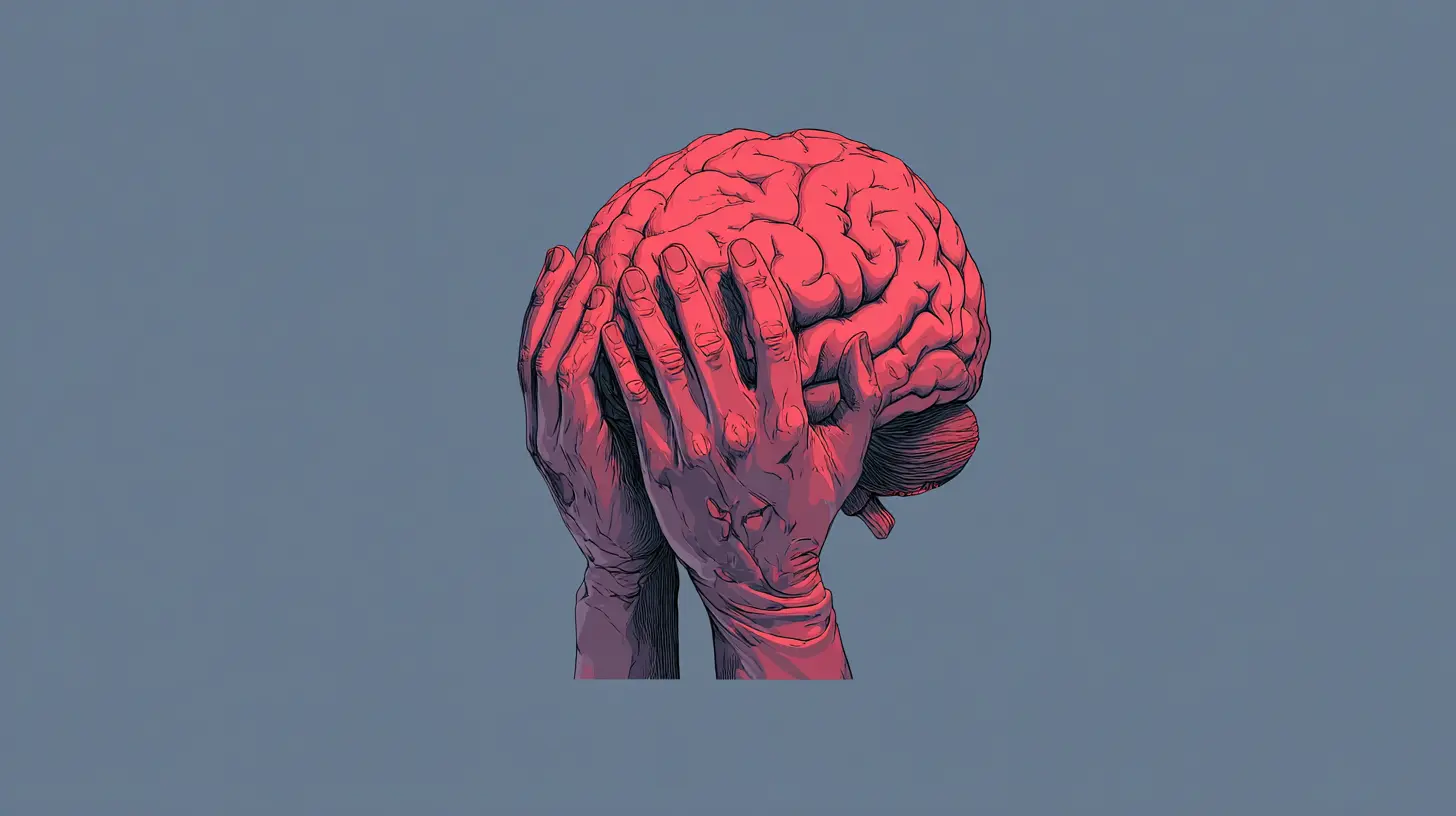
Cortisol: The Double-Edged Sword
Let’s talk about cortisol, the infamous stress hormone.In small doses, it’s your buddy. It helps you stay alert, energized, and focused.
But chronic cortisol exposure? That’s when it becomes your frenemy.
Prolonged high cortisol levels can:
- Shrink your hippocampus (the memory and learning hub)
- Impair your immune system
- Wreck your sleep cycle
- Increase belly fat
- Trigger inflammation all over the body
Yup, stress literally eats away at your brain and body from the inside out. No sugar-coating it.
Anxiety and the Brain: A Broken Alarm System
If stress is a reaction to a threat, anxiety is the anticipation of one. It’s like your brain has a faulty smoke detector that goes off every time you toast bread.The Overactive Amygdala
People with anxiety have an amygdala that's working overtime, detecting danger where none exists. It sends distress signals even during harmless activities—like walking into a meeting or answering a phone call.The Hippocampus: Memory Gone Haywire
The hippocampus, which helps store memories, also plays a role. If it’s been damaged by chronic stress, it can misfile memories or exaggerate past events—making you freak out over stuff that isn’t actually threatening.The Prefrontal Cortex: Losing Control
And let’s not forget the prefrontal cortex, which is supposed to help you assess threats rationally. In anxiety-prone brains, this region doesn’t regulate the amygdala effectively. It’s like putting a toddler in charge of your thermostat.Neurotransmitters in the Mix: Your Mood Messengers
Now, let’s sprinkle a little chemistry on top.These brain chemicals play a huge role in stress and anxiety:
🧬 Serotonin – The Mood Stabilizer
Low serotonin levels are tied to anxiety and depression. It helps regulate mood, sleep, and appetite. Without enough, your brain turns into a chaotic nightclub where the bouncer called in sick.🧬 Dopamine – The Reward Seeker
Too little dopamine? You feel unmotivated and joyless. Too much? You might feel jittery or even paranoid. It’s all about balance.🧬 GABA – The Calming Force
Gamma-aminobutyric acid (GABA) tells your brain to chill. Low GABA levels often lead to racing thoughts and jittery nerves—classic symptoms of anxiety.🧬 Norepinephrine – The Alarm Bell
This one amps up alertness and energy during stress. Problem is, it can also contribute to that anxious “wired but tired” feeling.How Chronic Stress Rewires the Brain (No, Seriously)
Here’s the scary part—your brain actually changes in response to chronic stress.This process is called neuroplasticity, and while it’s great when you’re learning a new skill, it’s bad news when you're trapped in a stress loop.
- The amygdala grows, becoming more reactive.
- The hippocampus shrinks, weakening memory and learning.
- The prefrontal cortex diminishes, reducing rational thought and self-control.
Basically, your brain starts optimizing itself for survival, not for happiness or logic. It’s like turning a luxury cruise ship into a battleship.
Your Nervous System’s Two Sides: Sympathetic vs. Parasympathetic
Your autonomic nervous system has two main modes:1. Sympathetic Nervous System – Fight or Flight
Activated by stress, it prepares your body for danger. You feel alert, your heart pounds, and digestion shuts down.2. Parasympathetic Nervous System – Rest and Digest
This is your calm-down system. It lowers your heart rate, stops the cortisol parade, and restores balance.When you’re constantly stressed, your body spends way too much time in sympathetic mode and forgets how to relax. No wonder you're exhausted.
Why Modern Life Triggers Ancient Instincts
Here’s the kicker – your brain hasn’t evolved much since the caveman days.Back then, stress meant running from a saber-toothed tiger.
Today, your tiger might be an overflowing inbox, a toxic boss, or your phone buzzing at 2 a.m. with an email marked “URGENT.”
The stressor changed. But the biological reaction stayed the same. That’s why your body goes into combat mode over things that aren’t life-or-death.
Can You Rewire Your Brain? Heck Yes.
Here’s the good news: your brain is plastic (not in the Tupperware way – in the adaptable way). That means you’re not doomed.🧘♀️ Meditation & Mindfulness
Research shows that regular mindfulness practice shrinks the amygdala and strengthens the prefrontal cortex. Translation? You freak out less and think more clearly.🏃♂️ Exercise
Cardio isn’t just good for your body. It boosts serotonin, dopamine, and endorphins, reducing both anxiety and depression symptoms.😴 Sleep Like It’s Your Job
Lack of sleep = more cortisol, less neurogenesis. Guard your sleep like it’s a sacred ritual.🍎 Nutrition
Your gut microbiome actually influences your brain. Eat clean, and your brain chemistry improves. Go full fast food? Expect brain fog and mood dips.🗣️ Therapy & Cognitive Behavioral Techniques
CBT and other therapies help rewire thought patterns, giving you better tools to manage anxiety triggers and obsessive loops.Final Thoughts: You’re Not Broken – Just Human
Let's be real—living in a high-stress world with an ancient brain is tough. But understanding the neuroscience behind stress and anxiety doesn’t make you weak—it gives you superpowers. When you know what’s happening under the hood, you can stop letting your brain run the show like a drama queen and start calling the shots yourself.So the next time your heart pounds out of nowhere, or your thoughts spiral like a Netflix binge at 2 a.m., remember this: There’s a science to it. And now, you’ve got the blueprint.
You’ve got this.
all images in this post were generated using AI tools
Category:
PsychologyAuthor:

Eliana Burton
Discussion
rate this article
2 comments
Amanda McVey
This article beautifully captures the complexity of our mind.
August 19, 2026 at 4:19 AM
Eliana Burton
Thank you! I'm glad you found it insightful. Understanding our minds is key to managing stress and anxiety.
Hailey McGowan
Understanding the neuroscience of stress and anxiety opens doors to effective coping strategies. By learning about our brain's responses, we can empower ourselves to confront challenges with resilience and hope. Let's embrace these insights and take steps toward a calmer, more balanced life.
May 19, 2026 at 4:08 AM
Eliana Burton
Absolutely! Understanding the brain's role in stress and anxiety is key. It gives us tools to build resilience and find balance in our lives. Let's keep exploring these insights together.