The Mental Benefits of Mastering a New Skill
11 September 2026
There is a particular kind of joy that shows up when a skill finally clicks. Maybe it is the first time you play a song all the way through without stopping. Maybe it is the moment a new language stops sounding like noise and starts sounding like meaning. Maybe it is the quiet satisfaction of fixing a leaking pipe with your own hands. Whatever the skill, that moment of mastery does something to the mind that goes far beyond the practical result. It changes how you see yourself, how you handle frustration, and how you move through the rest of your life.
This article is about that inner transformation. Not the surface-level perks like a new hobby to mention at parties, but the deeper mental shifts that come from pushing through the awkward, clumsy, beginner phase and reaching a place of genuine competence. We will look at what happens in the brain, what happens in your emotional life, and what happens in your daily behavior when you commit to mastering something new. We will also look at the mistakes people make, the myths that hold them back, and the practical choices that make the whole process more rewarding.

Why Mastery Matters More Than You Think
Most people understand that learning a skill has practical value. You learn to cook so you can eat better. You learn to code so you can get a better job. You learn to swim so you do not drown. Those are obvious benefits. But the mental benefits are often deeper and more lasting than the practical ones, and they deserve their own spotlight.When you master a skill, you are not just adding a tool to your toolbox. You are reshaping your self-concept. You are proving to yourself that you can start from zero and become capable. That proof is not something anyone can give you. It has to be earned through repetition, failure, and eventual success. And once you have it, it tends to spill over into other areas of your life.
Consider a person who decides to learn woodworking. At first, they cannot cut a straight line. They waste wood. They get splinters. They feel clumsy. But after months of practice, they build a small table that actually stands up straight. That table is not just a piece of furniture. It is evidence that they are the kind of person who can figure things out. That evidence changes how they approach problems at work, how they handle conflict in relationships, and how they talk to themselves when things go wrong.
This is why mastery matters more than most people realize. It is not just about the skill. It is about the identity that grows around the skill.

What Happens in the Brain When You Learn
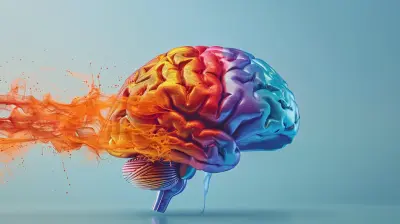
The brain is not a fixed machine. It is more like a living garden that reshapes itself based on what you do. When you practice a new skill, you are literally changing the structure of your brain. This process is called neuroplasticity, and it is one of the most hopeful findings in modern psychology.At the beginning of learning something new, your brain has to work hard. Every movement, every decision, every piece of information feels effortful. That is because your brain is building new neural pathways. It is like cutting a trail through a dense forest. The first pass is slow and exhausting. But every time you repeat the action, the trail gets a little wider and a little smoother. Eventually, it becomes a road. And with enough practice, it becomes a highway.
This is why experts can do complex things without seeming to think. A pianist does not consciously think about which finger to move. A chess grandmaster does not consciously calculate every possible move. Their brains have built highways that allow them to process information quickly and efficiently. But here is the key point: those highways were not there at the beginning. They were built through effort, repetition, and a willingness to be bad at something for a while.
The mental benefits of this process go beyond the skill itself. When you learn something new, you are strengthening your brain's ability to learn anything. You are improving your memory, your attention, and your cognitive flexibility. You are also building what psychologists call "self-efficacy," which is the belief that you can handle challenges and achieve goals. That belief is one of the strongest predictors of success in almost every area of life.

The Emotional Payoff of Getting Good at Something
There is a specific emotional reward that comes from mastery, and it is different from the pleasure of entertainment or the comfort of relaxation. It is the feeling of competence. It is the sense that you are capable, that you can handle yourself, that you are not helpless.This feeling is not just nice. It is protective. People who feel competent tend to handle stress better. They are less likely to fall into anxiety or depression. They are more likely to take on challenges and bounce back from setbacks. In a world that often feels unpredictable and overwhelming, the feeling of competence is a kind of psychological armor.
Think about a person who learns to sail. At first, they are at the mercy of the wind and the water. They feel small and incompetent. But as they learn, they start to understand how the boat responds. They start to anticipate the gusts. They start to feel a sense of control. That sense of control does not just stay on the water. It follows them onto land. They walk into meetings with more confidence. They handle unexpected problems with more calm. They feel less like a victim of circumstances and more like an agent of their own life.
This is the emotional payoff of mastery. It is not just about the skill. It is about the feeling of being capable. And that feeling is one of the most valuable things you can cultivate.

Mastery and the Joy of Flow
One of the most joyful mental states you can experience is called flow. This is the state of being so absorbed in what you are doing that time seems to disappear. You are not bored. You are not anxious. You are just fully engaged. You are in the zone.Flow is not something you can force. It happens when you are doing something that is challenging but not overwhelming. It happens when you have clear goals and immediate feedback. It happens when you are using your skills to their fullest.
Here is the interesting part: flow is much easier to achieve when you have mastered a skill. When you are a beginner, everything feels hard. You are constantly making mistakes. You are constantly stopping to think. That is not flow. That is struggle. But as you get better, the struggle fades. The actions become more automatic. The feedback becomes clearer. And suddenly, you find yourself slipping into that joyful state of complete absorption.
This is one of the great rewards of mastery. It is not just that you get better at something. It is that you get to experience the joy of flow more often. You get to lose yourself in the activity. You get to feel fully alive and fully engaged. And that is a kind of happiness that is hard to find anywhere else.
The Social Side of Skill Mastery
Mastery is often a solitary pursuit, but it has a social dimension that is easy to overlook. When you master a skill, you become part of a community. You join a group of people who share your interest. You have something to talk about. You have something to teach. You have something to learn from others.This social connection is a powerful mental benefit. Humans are social creatures. We thrive when we feel connected to others. And one of the easiest ways to connect is through shared interests and shared skills. When you learn to play an instrument, you can join a band. When you learn to cook, you can host dinners. When you learn a language, you can talk to people you could not talk to before.
There is also a deeper social benefit. When you master a skill, you become someone others can rely on. You become the person who can fix the bike, bake the cake, or solve the problem. That reliability is a form of social value. It makes you feel needed. It makes you feel important. And that feeling is a powerful source of mental well-being.
Common Mistakes and Misconceptions
There are many myths about mastery that hold people back. One of the most common is the idea that you need natural talent. This is simply not true. While some people may have a slight advantage at the beginning, the research on expertise is clear: deliberate practice matters far more than innate ability. The people who become masters are not the ones who were born with a gift. They are the ones who put in the hours.Another common mistake is the belief that you have to be perfect. This is a trap. Perfectionism leads to procrastination. It leads to fear of failure. It leads to giving up. The truth is that mastery is a process. You are going to make mistakes. You are going to have bad days. You are going to feel like you are not making progress. That is normal. That is part of the journey. The people who succeed are not the ones who never fail. They are the ones who keep going after they fail.
A third misconception is that mastery is a destination. It is not. Mastery is a direction. You never fully arrive. There is always more to learn. There is always room to improve. And that is actually a good thing. Because the joy is in the journey, not just the destination. The people who love what they do are the ones who keep growing. They are the ones who stay curious. They are the ones who never stop learning.
How to Choose the Right Skill
Not all skills are created equal. Some skills are more rewarding than others. Some are more useful. Some are more enjoyable. So how do you choose the right one?First, consider what you want from the skill. Do you want to relax? Do you want to challenge yourself? Do you want to connect with others? Do you want to advance your career? The answer to these questions will point you in different directions. If you want to relax, you might choose something like gardening or knitting. If you want to challenge yourself, you might choose something like chess or rock climbing. If you want to connect with others, you might choose something like dancing or team sports. If you want to advance your career, you might choose something like public speaking or data analysis.
Second, consider your resources. How much time do you have? How much money can you spend? How much space do you need? Some skills are cheap and easy to start. You can learn to draw with a pencil and a piece of paper. Other skills are expensive and require special equipment. You can learn to fly a plane, but it will cost you. Be realistic about what you can afford.
Third, consider your personality. Are you patient? Are you competitive? Are you social? Are you introverted? Some skills require patience. Some require aggression. Some require teamwork. Some require solitude. Choose something that fits who you are, or choose something that stretches you in a direction you want to grow.
Finally, consider the joy. Does the skill make you happy? Does it make you curious? Does it make you want to keep going? If the answer is no, you might want to choose something else. Because mastery takes time. It takes effort. And if you do not enjoy the process, you are not going to stick with it.
Practical Advice for Getting Started
Starting is often the hardest part. Here are some practical tips to make it easier.Start small. Do not try to master everything at once. Pick one small piece of the skill and focus on that. If you want to learn guitar, do not try to learn all the chords at once. Learn one chord. Practice it until you can play it cleanly. Then learn another.
Set a schedule. Mastery does not happen by accident. It happens by design. Set aside time every day or every week to practice. Even fifteen minutes a day can make a big difference over time. The key is consistency, not intensity.
Find a teacher or a community. You do not have to learn alone. Find someone who knows more than you do. Take a class. Join a group. Read a book. Watch a video. There are more resources available today than at any point in history. Use them.
Track your progress. It is easy to feel like you are not making progress when you are in the middle of it. So track it. Keep a journal. Record a video. Take a photo. Look back at where you started. You will be surprised at how far you have come.
Celebrate small wins. Do not wait until you are a master to feel good about yourself. Celebrate the small victories. The first time you play a song all the way through. The first time you cook a meal without burning it. The first time you have a conversation in a new language. Those moments matter. They are the building blocks of mastery.
When Mastery Is Not the Goal
It is worth saying that mastery is not for everyone, and it is not for every skill. Sometimes you just want to have fun. Sometimes you just want to try something new. Sometimes you just want to relax. And that is perfectly fine.The mental benefits of learning a new skill do not require you to become an expert. You can get many of the benefits just by engaging with something new. You can get the joy of discovery. You can get the satisfaction of progress. You can get the social connection of a community. You do not have to be the best. You just have to be engaged.
So do not put pressure on yourself to master everything. Choose the skills that matter to you. Choose the ones that bring you joy. And let the rest be hobbies, experiments, and pleasant distractions. There is no rule that says you have to be great at everything. The goal is not perfection. The goal is a rich, full, and interesting life.
Final Thoughts
Mastering a new skill is one of the most rewarding things you can do for your mind. It builds new neural pathways. It boosts your confidence. It gives you access to flow. It connects you to others. It gives you a sense of purpose and competence that spills over into every area of your life.But it is not always easy. It takes time. It takes effort. It takes a willingness to be bad at something before you get good. It takes patience and persistence and a sense of humor about your own mistakes. But the rewards are worth it. The joy of mastery is not just about the skill. It is about the person you become in the process.
So pick something. Start small. Be patient. And enjoy the journey. Your mind will thank you.
all images in this post were generated using AI tools
Category:
Mental FitnessAuthor:

Eliana Burton
Discussion
rate this article
2 comments
Rory Diaz
Mastering a new skill is not just about the achievement; it's a powerful way to boost your mental health. Engaging your mind in learning fosters resilience, sharpens focus, and enhances self-esteem, paving the way for personal growth and fulfillment.
September 28, 2026 at 4:46 PM
Eliana Burton
Absolutely, mastering a new skill not only enriches our lives but also strengthens our mental well-being. It's a journey that fosters growth and resilience.
Parisa Dorsey
Great insights on skill mastery and its mental health benefits!
September 21, 2026 at 3:22 AM
Eliana Burton
Thank you! I'm glad you found the insights valuable. Mastery can truly transform our mental well-being.