Mastering Your Mindset for Better Decision Making
13 September 2026
Every decision you make runs through a filter you rarely see. That filter is your mindset, and it shapes what you notice, what you ignore, how you weigh risk, and how quickly you commit or retreat. Most people believe they decide based on evidence and logic. In practice, they decide based on the interaction between the situation in front of them and the mental model they bring to it. Change the model and the same facts can produce a completely different choice.
This article is about that model. Not affirmations or vague positivity, but the specific cognitive postures that separate consistently good decision makers from people who are intelligent yet chronically stuck, impulsive, or paralyzed. You will find no promise of a single trick. What follows is a working framework, along with the trade-offs that come with using it.

What Mindset Actually Means in Decision Context
Mindset is a loaded word. In popular psychology it often gets reduced to optimism versus pessimism or fixed versus growth. Useful, but too narrow for decisions. For our purposes, think of mindset as the collection of default assumptions and attentional habits you bring to any choice. It has four working parts.First, your beliefs about your own judgment. Do you trust your instincts, or do you second-guess everything? Second, your orientation toward uncertainty. Do you treat unknowns as threats to eliminate or as conditions to manage? Third, your relationship with being wrong. Do you experience error as information or as identity damage? Fourth, your time horizon. Are you optimizing for how you will feel in ten minutes or in ten years?
These four dimensions do more to determine decision quality than raw intelligence. A brilliant person who treats every mistake as a threat to self-image will avoid decisions that carry any chance of visible failure. A person of average intellect who treats mistakes as data will iterate faster and end up ahead. The mindset, not the IQ, drives the outcome.
The Hidden Cost of a Fixed Decision Identity
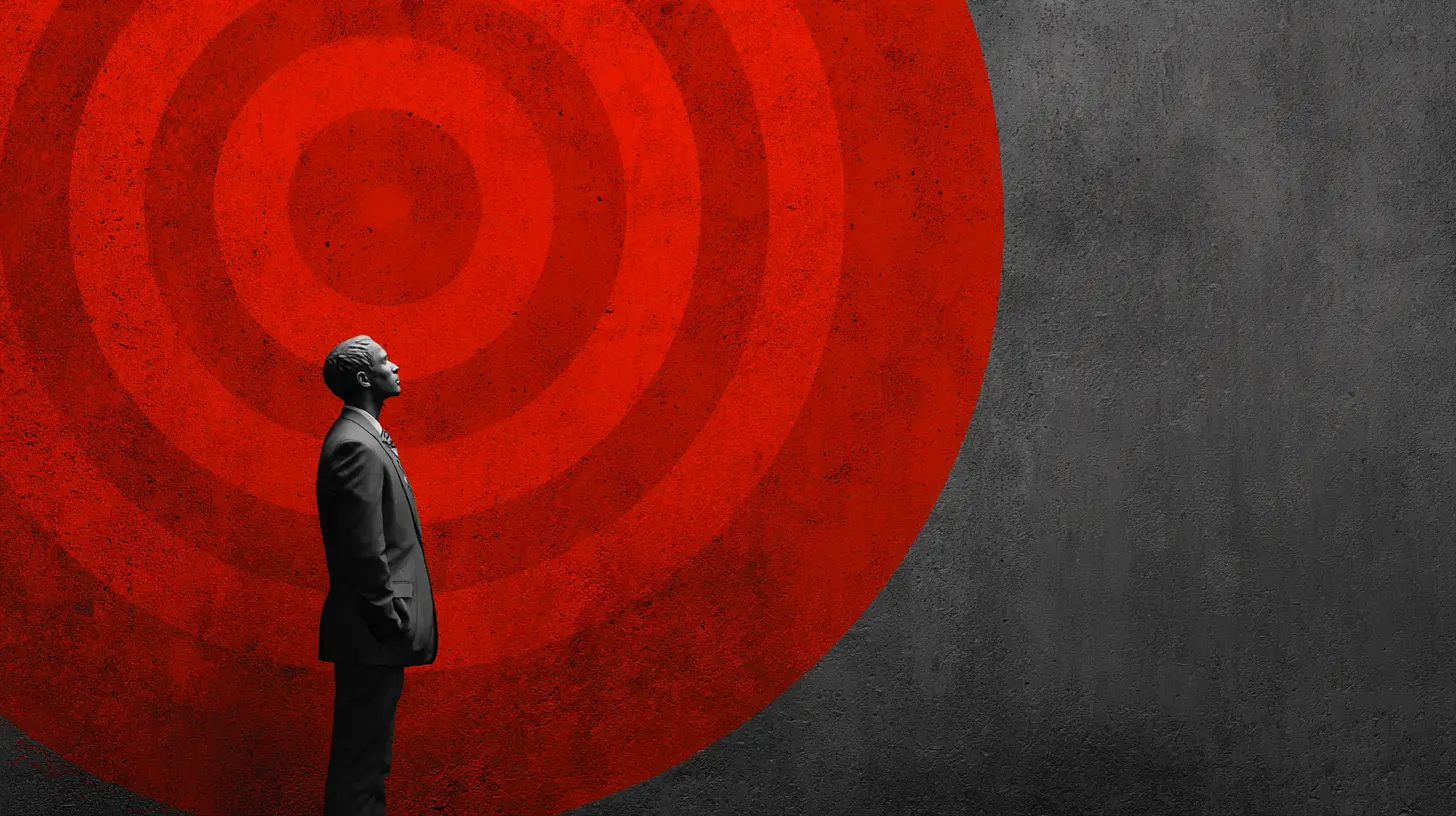
Many people carry an unexamined story about what kind of decision maker they are. "I am impulsive." "I am terrible with money." "I always overthink." These labels feel descriptive, but they function as instructions. Once you accept a label, you stop examining the behavior behind it.The mechanism is subtle. If you believe you are impulsive, you interpret every quick choice as evidence of your nature rather than a response to a specific situation. You stop asking whether the situation itself invited speed. You also stop practicing the skills that would change the pattern, because the pattern feels like identity rather than habit.
The alternative is not to declare yourself a great decision maker. That is just a different fixed label. The alternative is to treat your decision style as a set of habits that can be observed, tested, and revised. This is harder than it sounds because it requires tolerating the discomfort of not knowing what kind of person you are. Most people would rather have a bad identity than an uncertain one.

Why Uncertainty Is the Central Problem
Strip away the specific content of any hard decision and you find the same core difficulty: you must act before you can know whether you are right. This is not a flaw in your process. It is the permanent condition of decision making under uncertainty.Two mindsets handle this condition in opposite ways. The first tries to reduce uncertainty to zero before acting. This feels responsible. It often is not. Beyond a certain point, additional information does not improve the decision. It only delays it while the situation changes underneath you. The second mindset accepts that uncertainty can be managed but not eliminated, and focuses on making the decision robust across multiple possible futures.
Consider a hiring decision. The first mindset wants more interviews, more references, more tests. The second asks a different question: which candidate would I least regret hiring if my prediction about the role turns out to be wrong? The first optimizes for feeling certain. The second optimizes for resilience. In most real decisions, the second produces better outcomes.
This does not mean acting on thin information. It means recognizing the point at which additional information stops changing your choice and starts only changing your comfort level.

Probabilistic Thinking Without the Jargon
You do not need to calculate probabilities to think probabilistically. You need to hold your beliefs as degrees rather than absolutes. "This will work" becomes "this is more likely than not to work, and here is what would change my mind."The practical benefit is that probabilistic thinking keeps you connected to disconfirming evidence. If you are certain, contrary information feels like an attack. If you are at seventy percent, contrary information feels like useful input. The same fact lands differently depending on how tightly you are holding your position.
A useful habit is to assign rough confidence levels before you commit. Not precise numbers, just categories: almost certain, likely, a coin flip, unlikely, very unlikely. Then ask what evidence would move you up or down a category. If nothing could move you, you are not reasoning. You are defending.
The trade-off is real. Probabilistic thinking can slide into endless hedging, where you never commit because you never reach certainty. The antidote is to set a decision threshold in advance. Decide what level of confidence is enough to act given the stakes, then act when you reach it.
Outcome Bias and the Illusion of a Good Decision
A good outcome does not prove a good decision, and a bad outcome does not prove a bad one. This is one of the most important and most resisted ideas in decision science.Imagine two people who each drive home after drinking. One arrives safely. The other is stopped and arrested. The decision was identical. Only the outcome differed. We instinctively praise the first and condemn the second, but that reaction is outcome bias, and it corrupts how we learn.
The same distortion operates in business, medicine, and relationships. A leader makes a reckless bet that happens to pay off and gets promoted. A surgeon makes a sound call that produces a rare complication and gets sued. If you judge decisions only by results, you will copy reckless behavior that got lucky and abandon sound behavior that got unlucky.
The corrective is to separate the quality of the process from the quality of the result. Ask two questions after any significant outcome: was the reasoning sound given what was known at the time, and was there luck involved? Both can be true at once. A good process can produce a bad result, and a bad process can produce a good one. Tracking both keeps your learning honest.
The Role of Emotion: Signal, Not Saboteur
The popular advice to "remove emotion from decisions" is both impossible and unwise. Emotion is data. Fear signals possible threat. Anger signals a violated boundary. Excitement signals opportunity, and also, sometimes, a warning that you are about to do something you will regret.The problem is not emotion itself. It is emotion misread as analysis. When you are angry, you do not experience yourself as angry and biased. You experience yourself as right and clear. That is the danger.
A more useful stance is to treat strong emotion as a signal to slow down, not to stop. Name what you feel. Ask what it is responding to. Then ask whether the intensity is proportionate to the stakes. If you are furious about an email, the emotion is real but the decision it is pushing you toward, firing off a reply, is probably not the one you want. Waiting an hour is not suppression. It is letting the signal inform you without letting it drive.
Some decisions are genuinely better made with emotion leading. Choices about whom to marry, whether to have children, or what kind of work gives your life meaning are not well served by pure cost-benefit analysis. The skill is knowing which kind of decision you are facing.
Building a Decision Process You Actually Use
Frameworks are useless if they are too heavy to apply under pressure. A workable process has to be simple enough to run in minutes for small choices and expandable for large ones.Start with a single question: what am I actually deciding? Most people skip this. They argue about tactics when the real question is whether to proceed at all. Naming the decision precisely often shrinks it.
Next, separate reversible from irreversible decisions. Reversible decisions should be made quickly, because the cost of being wrong is low and the cost of delay is real. Irreversible decisions deserve more time, more input, and more explicit reasoning. Confusing the two is a common failure. People agonize over which restaurant to book and rush into a job offer.
Then ask what would have to be true for each option to be the right one. This flips the frame from defending a preference to testing it. It also surfaces assumptions you did not know you were making.
Finally, set a review point. Decide in advance when you will revisit the choice and what would trigger a change. This prevents two opposite errors: abandoning a sound course too early because of one bad week, and clinging to a failing course because you never defined what failure would look like.
Common Mistakes That Undermine Good Judgment
The first is confusing confidence with competence. The most confident person in the room is often the least calibrated, because confidence and accuracy are only loosely related. Seek out the person who says "I am not sure, but here is my read" over the one who says "trust me."The second is seeking confirming information. Once you have a preference, you naturally gravitate toward evidence that supports it. The fix is to actively look for the strongest argument against your position, not the weakest. If you cannot state the opposing case fairly, you do not understand your own.
The third is deciding while depleted. Decision quality degrades with fatigue, hunger, and stress. This is not weakness. It is biology. Schedule important choices for when you are rested, and avoid making consequential calls late in the day when possible.
The fourth is treating sunk costs as reasons to continue. Money, time, and effort already spent are gone. They should not influence what you do next, yet they do, constantly. The only relevant question is what the future looks like from here, given where you actually are.
The fifth is deciding to avoid deciding. Indecision feels neutral, but it is a choice with consequences. Often the worst ones, because they happen by default rather than by design.
When to Trust Intuition and When to Distrust It
Intuition is not magic. It is pattern recognition built from experience. In domains where you have thousands of hours of practice and rapid feedback, intuition is often excellent. Firefighters, chess players, and experienced nurses make fast, accurate calls that they cannot fully explain.In domains that are new, rare, or slow to give feedback, intuition is unreliable. Investing, hiring, and long-term career choices are poor candidates for gut feel, because you get few chances to learn and the feedback is delayed or noisy.
The practical test is simple. Ask how many similar decisions you have made and how quickly you learned whether you were right. High repetition plus fast feedback means trust your gut. Low repetition or slow feedback means slow down and reason explicitly. Most people apply intuition in exactly the wrong domains, trusting it in investing and ignoring it in their area of genuine expertise.
Managing Your Information Diet
You cannot make good decisions from bad inputs. Yet most people consume information passively, shaped by algorithms optimized for engagement rather than accuracy. This is a decision-making problem disguised as a media problem.Curate deliberately. Follow sources that disagree with you, not to be fair-minded in the abstract, but because they catch errors you would otherwise miss. Seek primary sources over summaries. When something important is at stake, go to the original data or document rather than someone's interpretation of it.
Also guard against information that feels productive but is not. Reading more about a decision often substitutes for making it. At some point, more input becomes a form of avoidance. Notice when you are researching to feel prepared rather than to actually decide.
The Long Game: Compounding Judgment
Decision making is a skill that compounds. Each decision, good or bad, is a data point about how you think. If you review your decisions honestly, you get better. If you only remember the outcomes that flatter you, you stay where you are.Keep a simple decision journal. Record what you decided, why, what you expected, and your confidence level. Revisit it in six months. The gap between what you expected and what happened is where the learning lives. Over a few years, this practice will teach you more about your own judgment than any book.
The mindset that makes all of this possible is not confidence or optimism. It is curiosity about your own errors. People who can look at a bad decision without flinching, extract the lesson, and move on will outperform people who need to be right. That is not a motivational slogan. It is the observable pattern behind almost everyone who makes consistently good choices over a long career.
Start with one decision this week. Name it precisely. Ask what would have to be true. Set a review date. Do that consistently, and the mindset takes care of itself.
all images in this post were generated using AI tools
Category:
Mental FitnessAuthor:

Eliana Burton
Discussion
rate this article
2 comments
Xander Black
In the garden of thought, our choices bloom, Tending to the roots of belief, dispelling gloom. With each mindful pause, clarity arises, Navigating paths of truth, where wisdom surprises. Embrace the power within, let intention steer, For in mastery of mindset, our vision grows clear.
September 28, 2026 at 3:57 AM
Eliana Burton
Thank you for your thoughtful reflection! Embracing intention truly transforms our decision-making journey.
Alexia Russell
So, mastering your mindset is like finding the perfect snack-sometimes you think you want chips, but really, it's all about those sweet fruits. Same goes for decisions; choose wisely, or you might end up with a bag of regrets!
September 25, 2026 at 2:28 AM