How to Talk to Kids About Body Image and Self-Esteem
8 May 2026
Let’s face it—kids today are growing up in a world where filters, curated selfies, and six-pack abs on cereal boxes are the norm. (Okay, not literally, but you get the point.) It’s no wonder that body image and self-esteem are becoming hot topics sooner than the tooth fairy can make a second visit. And if you’re a parent, teacher, or slightly overwhelmed grown-up in their life, you’re probably wondering how on earth to talk to them about it.
Don’t worry. You don’t need a PhD in child psychology or a crystal ball. Just a little humor, honesty, and heart. Let’s dive into the wonderfully weird and sometimes awkward world of helping kids feel good about themselves.
Why Body Image Talks Are Kinda a Big Deal
Remember growing up thinking your elbows were fat? No? Just me?Either way, body image is how we perceive our own bodies—and it forms early. Like, shockingly early. Kids as young as 5 can start to internalize messages about what bodies "should" look like. Add in social media, peer pressure, and the occasional off-hand adult comment (“She’s really let herself go!”), and we've got ourselves a self-esteem cocktail that no one ordered.
The good news? We can help kids build a rock-solid foundation of self-love and confidence before the world tries to chip away at it.
Start With You: Model What You Preach
Okay, here’s the hard truth—kids are watching us like hawks with smartphones. What you say about your own body (and others') matters. And yes, that includes huffing about your "quarantine 15" in front of the mirror.So, try this:
- Talk positively about your own body—even if it's a tough day.
- Avoid body-shaming anyone (yes, even celebrities—sorry, reality TV).
- Celebrate what your body does over what it looks like. ("These strong legs helped me haul the groceries, kid. They deserve a trophy.")
Because if you call your thighs "gross," what do you think your kid will think about theirs?
Keep It Age-Appropriate (No TED Talks for Toddlers)
You don’t need to sit your 7-year-old down for a two-hour deep dive on cultural beauty standards. Instead, tailor the convo to their age and curiosity level.For Littles (Ages 3–7):
- Focus on health, strength, and abilities.- Use diverse books and shows that feature different body types in positive roles.
- Avoid over-praising appearance. Say, “You look ready to take on the world!” instead of just “You’re so pretty.”
For Middles (Ages 8–12):
- Start talking about media messages. Ask, “Do you think this ad is real?” (Spoiler: it’s not.)- Point out body diversity in real life.
- Be open to their questions—even the awkward ones. ("Why does my belly stick out?" is not a personal attack.)
For Teens (Ages 13+):
- It’s time to go deep. Discuss diet culture, Photoshop, and how feeling good isn’t one-size-fits-all.- Encourage critical thinking. “Why do you think that influencer uses those filters?”
- Validate their feelings. Teen brains are like emotional microwaves—everything heats up fast.
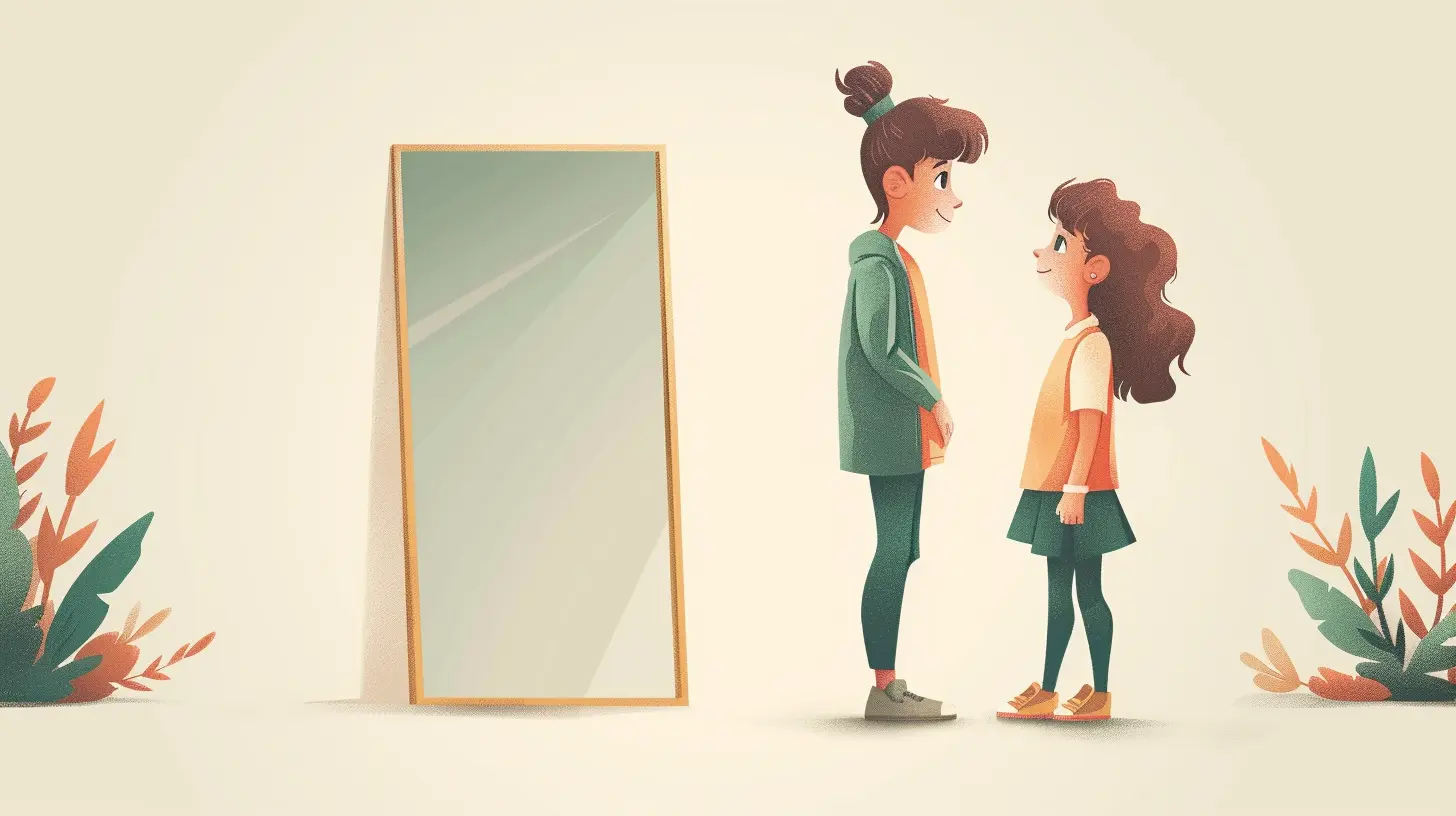
Compliment the Person, Not the Packaging
We love to tell kids how cute or handsome they are. It's practically in our DNA.But when compliments revolve only around looks, kids may start to tie their value to their appearance. Spoiler alert: that’s a slippery slope straight to “Am I good enough?” land.
Try mixing it up:
- “You’re really kind to your friends.”
- “That was super brave of you to speak up in class.”
- “You always notice when someone needs help. That’s awesome.”
Let their self-worth bloom from qualities they can control and grow—not from what’s staring back in the mirror.
Don’t Ignore the Elephant in the Room (a.k.a. Media)
Let’s talk TikTok, Instagram, YouTube, and whatever Gen Alpha is obsessed with this week. Much of the online world screams: “Look this way, or you’re not enough.”But banning everything digital? Not realistic.
Instead, help kids become media-savvy detectives:
- Watch stuff together. Pause and ask questions like, “Does that look real to you?”
- Explain photo editing and filters. Even better—show them some before-and-after examples.
- Remind them that likes and follows ≠ self-worth.
Teach them to scroll with a filter of their own—one that sees through the BS.
Food Talk: It’s Not About “Good” vs. “Bad”
We’ve all been there—calling dessert a “cheat” or saying we’ll “be bad” for grabbing fries. Here’s the issue: little ears hear those words and start labeling food and their choices as moral.Instead...
- Talk about food as fuel and fun, not guilt and shame.
- Encourage variety, not restriction. (Yes, veggies. Yes, cookies. It’s called balance, baby.)
- Avoid using food as a reward or punishment.
Food should be neutral—not an emotional landmine at every meal.
When Curiosity Gets... Uncomfortable
At some point, your kid might ask, "Why is that person so big?" Or—gulp— "Why does your tummy jiggle?"Take a deep breath and know this: They’re not trying to hurt your feelings. Kids are blissfully blunt, but they’re also learning.
Here’s how to defuse the situation without spiraling:
- Keep your cool. Don’t shame their curiosity.
- Say something like, “People come in all shapes and sizes. Isn’t that cool?”
- Reinforce kindness and respect. “We talk about differences with love, not judgment.”
Normalize differences. Diversity isn’t just beautiful—it’s essential.
Create A Safe Space for Feelings (Yes, Even The Ugly Ones)
Let’s be honest—feeling insecure is part of growing up (okay, and adulthood too). But kids need to know they can come to you when they’re feeling not-so-great about themselves.You can help by:
- Listening more than fixing. Sometimes they just need to vent.
- Sharing your own stories of insecurity and how you’ve managed them. (Everyone had a bad haircut phase.)
- Offering reassurance without brushing them off. “I get why that upset you. Want to talk more about it?”
When kids feel seen and heard, their self-esteem blooms—no pep talk required.
Boost Their Confidence From the Inside Out
Let’s build that confidence muscle, shall we?Here are some easy (and sneaky) ways to do it:
✅ Give them responsibilities: Nothing screams “I’m capable!” like successfully folding laundry (even if the socks don’t match).
✅ Let them try new things (and fail): Confidence isn’t the absence of failure—it’s learning to get back up after.
✅ Celebrate effort over outcome: A+ for trying, not just for acing it.
✅ Encourage positive self-talk: Help them turn “I can’t do this” into “I’m still learning.”
Confidence is like a good sourdough starter—it builds with time, nurturing, and the occasional mess.
What to Say (and What Not to Say)
Let’s do a quick lightning round for the "oh-no-what-do-I-say-now" moments:🗣️ Instead of “You’re gaining weight,” try “How are you feeling lately?”
🗣️ Instead of “You need to eat less,” go with “Let’s talk about how food makes our bodies feel.”
🗣️ Instead of “You’re perfect just how you are,” say “You’re worthy and loved—always.”
The goal isn’t to avoid the topic. It’s to redirect it in a way that empowers them, not shuts them down.
Red Flags to Watch For (And What to Do Next)
Sometimes, despite our best efforts, kids may struggle deeply with body image or self-esteem. It’s important to know the signs:🚩 Obsessing over weight or appearance
🚩 Avoiding meals or secretly eating
🚩 Withdrawing from social situations
🚩 Negative self-talk that sticks around
What to do? Don’t panic, but don’t ignore it either. Talk to a pediatrician, counselor, or therapist. Early support can make a huge difference.
Wrap-Up: Keep It Real, Keep It Loving
Talking to kids about body image and self-esteem doesn’t need to be a one-time PowerPoint presentation. It’s in the little day-to-day chats, the way you talk about yourself, what you scroll past on Instagram, and the conversations you dare to have even when they feel awkward.Let your kid know they are more than a body. They’re a complete package—goofy laughter, kind heart, stubborn opinions, and all.
And honestly? That’s way more beautiful than anything they’ll see on a screen.
Final Thought: You’ve Got This
If you’re reading this, it means you care—and that puts you miles ahead already. Your kid doesn’t need you to be perfect—they just need you to show up, listen, and remind them that they are enough.Now go forth and raise the next generation of self-loving, media-savvy, body-diverse, confident humans.
(And maybe give yourself a high-five while you’re at it.
all images in this post were generated using AI tools
Category:
Body ImageAuthor:

Eliana Burton
Discussion
rate this article
2 comments
Raine McLain
Open conversations about body image can empower kids to build self-esteem and foster a healthier relationship with themselves.
August 30, 2026 at 2:36 AM
Thor McGlynn
Encourage open dialogue and celebrate diversity to foster healthy self-image in kids.
May 11, 2026 at 2:17 PM
Eliana Burton
Absolutely! Open dialogue is key. Celebrating diversity helps kids appreciate themselves and others.