How to Cultivate Inner Stability in Chaotic Times
26 November 2026
Chaos rarely announces itself. It accumulates. A political crisis here, a financial worry there, a health scare, a relationship strain, a news cycle that never seems to end. Before long, the ground beneath you feels less like solid earth and more like a ship's deck in heavy weather. Most people respond by trying to control the external storm, which is precisely the wrong move. Inner stability is not about calming the world. It is about building a reliable internal architecture that holds up regardless of what the world is doing.
This article is about that architecture. It draws on established psychological principles, clinical observation, and practical reasoning about how humans actually function under stress. It avoids quick fixes because there are none. What follows is a working model you can build over time, with attention to why each piece matters, when it helps, and where it can go wrong.
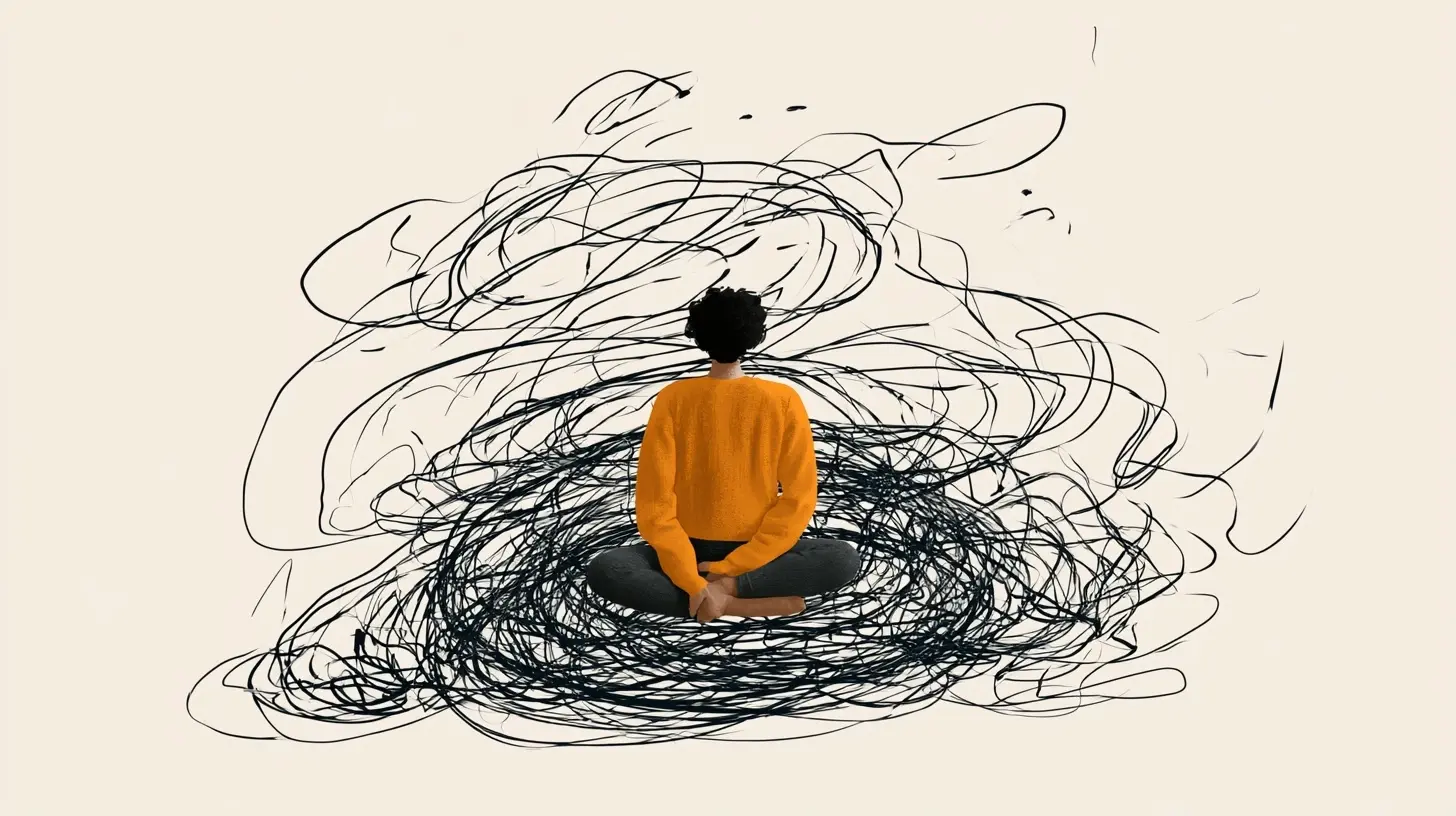
What Inner Stability Actually Means
People often confuse inner stability with emotional suppression or with constant calm. Neither is accurate. Suppression is the act of pushing feelings out of awareness, which usually backfires by intensifying them and draining cognitive resources. Constant calm is a fantasy sold by wellness marketing. No healthy nervous system stays flat.A more useful definition: inner stability is the capacity to remain in contact with reality, including painful reality, without being overwhelmed or shutting down, and to keep acting in line with your values while your emotions fluctuate. It is a dynamic process, not a static state. A stable person still feels fear, grief, and anger. The difference is that those feelings inform their choices rather than hijack them.
This distinction matters because it changes what you practice. You are not training yourself to feel nothing. You are training the relationship between you and what you feel.
Stability Is Not the Same as Resilience
Resilience usually refers to recovering after adversity. Stability refers to functioning well during it. The two overlap but are not identical. Someone can be highly resilient in the long run and still fall apart in the middle of a crisis. Conversely, someone can stay steady through chaos and then struggle with the aftermath. Both capacities are worth building, but they require different skills. Stability leans more heavily on present-moment regulation, clear thinking under pressure, and a coherent sense of identity. Resilience leans more on meaning-making, social support, and gradual recovery.
Why Chaos Disrupts the Mind
To build stability, you need a working understanding of what chaos does to cognition. Under acute stress, the body releases catecholamines and cortisol. Heart rate rises, attention narrows, and the prefrontal cortex, the part of the brain responsible for planning and impulse control, becomes less influential relative to older threat-detection circuits. This is adaptive in short bursts. It is corrosive when sustained.The practical consequences are predictable. You catastrophize. You overestimate threats and underestimate your ability to cope. You make decisions that feel urgent but are not. You lose access to nuance. You become more reactive with the people closest to you. None of this is a character flaw. It is physiology, and knowing that is the first step toward not treating every anxious thought as a reliable report about reality.
Chronic chaos adds a second layer. When uncertainty persists for weeks or months, the brain stops returning to baseline between stressors. Sleep degrades. Irritability rises. Concentration fragments. People often interpret this as personal weakness when it is really cumulative load. The fix is not to try harder in the same direction. It is to reduce the load where possible and to build recovery into the system.

The Pillars of Inner Stability
Inner stability rests on several interlocking foundations. Neglect any one of them and the others weaken. This is why single-technique approaches, like meditation alone or exercise alone, tend to disappoint over time.1. Physiological Regulation
Your emotional state is inseparable from your body state. Poor sleep, skipped meals, dehydration, and sedentary days all lower the threshold at which ordinary problems feel overwhelming. This is not a moral issue. It is mechanics.Practical steps that reliably help:
- Protect sleep with a consistent wake time, even on difficult days. Wake time anchors circadian rhythm more effectively than bedtime.
- Eat at regular intervals. Blood sugar swings mimic anxiety and irritability.
- Move daily, even briefly. A twenty-minute walk reduces physiological arousal and improves mood regulation more reliably than most apps.
- Use slow breathing deliberately during stress. Extending the exhale to roughly twice the length of the inhale activates the parasympathetic branch of the nervous system. Two to three minutes is often enough to shift state.
Why this works: regulation is bottom-up as well as top-down. You can influence emotion by changing thoughts, but you can also influence it by changing breathing, posture, and movement. The bottom-up route is often faster and requires less cognitive effort, which matters when you are already depleted.
When it does not work: physiological tools manage arousal, not meaning. If you are grieving or facing a genuine loss, breathing exercises will not resolve it. They simply keep you functional enough to process it.
2. Cognitive Flexibility
Stability requires the ability to hold multiple interpretations of a situation at once and to update your view as evidence changes. Under threat, the mind defaults to certainty: this will definitely fail, they are definitely against me, nothing will ever improve. Certainty feels safer than ambiguity, but it is usually wrong.A useful practice is to generate at least three plausible explanations for any distressing event before acting. This is not forced optimism. It is calibration. If a colleague sends a curt email, the possibilities include irritation with you, stress from their own life, a rushed morning, or simple brevity. Treating the first interpretation as fact is a common and costly error.
Another tool is separating observation from interpretation. "My manager did not respond to my proposal" is an observation. "My manager thinks I am incompetent" is an interpretation. The first can be acted on. The second can only be believed or doubted. Writing them in separate columns sounds mechanical, but it reliably reduces reactivity because it forces the brain to distinguish between what happened and what it concluded.
A caution: cognitive flexibility is not the same as endless reframing. Some situations are genuinely bad and require action, not reinterpretation. The skill is knowing which is which. If a problem is solvable, solve it. If it is not, reframing helps. Confusing the two leads to either passivity in the face of fixable problems or futile attempts to control the uncontrollable.
3. Values as an Anchor
When external circumstances are unpredictable, internal direction becomes more important. Values function as a compass that does not depend on outcomes. If you value honesty, you can act honestly regardless of whether the situation rewards it. If you value care for your family, you can show up for them even when the broader world is unstable.The practical exercise is simple but demanding. Identify three to five values that matter most to you. Then, for each, name one concrete action you can take this week that expresses it. Not a feeling. An action. Values that never translate into behavior become slogans.
Why this works: values provide a sense of agency when outcomes are uncertain. Research on psychological flexibility suggests that acting in line with values reduces the distress that comes from feeling powerless. You cannot control the storm, but you can control whether you are the kind of person who helps others during it.
Common mistake: treating values as aspirations rather than commitments. "I value health" is not a value in practice. "I will walk after lunch three days this week" is. The second is testable and therefore useful.
4. Tolerance of Uncertainty
Most people try to eliminate uncertainty. This is a trap. The attempt to eliminate it, through overchecking, overplanning, or reassurance-seeking, tends to increase anxiety rather than reduce it. Each check provides brief relief and strengthens the belief that uncertainty is unbearable.A better approach is graduated exposure to uncertainty. Start with small, low-stakes situations. Send a message without rereading it five times. Make a decision with eighty percent of the information instead of waiting for ninety-five. Notice the discomfort without acting on it. Over time, the nervous system learns that uncertainty is uncomfortable but survivable.
When this should not be used: in genuinely high-stakes decisions where additional information is cheap and available, gathering it is sensible. The skill is distinguishing between productive information-gathering and anxious reassurance-seeking. A useful test: does the additional check change your decision, or does it only temporarily reduce your anxiety? If the latter, it is avoidance in disguise.
5. Deliberate Attention Management
Chaos is often amplified by attention. A constant news feed, a phone that buzzes with alerts, and a mind that rehearses worst-case scenarios all feed the sense of emergency. Attention is a finite resource, and where you place it shapes how you feel.Practical measures:
- Set specific times for news and social media rather than checking continuously.
- Turn off non-essential notifications.
- Schedule worry. Fifteen minutes at a set time, with a notebook, is more effective than suppressing worry all day. The mind worries less when it knows it will be heard.
- Protect at least one daily activity that requires full attention: cooking, exercise, a craft, conversation without a phone.
Why this works: rumination and threat-monitoring are maintained by repeated attention. Reducing the frequency of these loops lowers baseline arousal. It is not about ignorance. It is about choosing when and how you engage, rather than being pulled.

Building a Daily Practice Without Overengineering It
People often fail at stability because they design elaborate routines that collapse under stress. A better approach is to build a minimal system that survives bad days.The Minimum Viable Routine
Three elements are enough to start:1. A fixed wake time.
2. Ten minutes of movement.
3. One brief check-in with yourself, ideally written, answering two questions: what am I feeling, and what matters most today?
This takes under thirty minutes. It is boring. It works. The point is not optimization. It is consistency under conditions that make consistency hard.
When to Add More
Once the minimum is stable for several weeks, add components. A short breathing practice. A weekly review. A scheduled conversation with someone you trust. Add one thing at a time, and only after the previous addition has survived a difficult week. This sequencing matters because overload is one of the most common reasons people abandon practices entirely.Social and Relational Stability
Inner stability is not a solo project. Humans regulate through others. This is not weakness. It is how the nervous system evolved.The Difference Between Support and Venting
Venting feels good in the moment and often makes things worse over time. Repeatedly rehearsing grievances with sympathetic listeners can deepen the sense of injustice and helplessness. What helps more is co-regulation: being with someone calm, being heard without being encouraged to spiral, and receiving perspective.A useful question before a conversation: do I want comfort, perspective, or help solving this? Say which one. Most misunderstandings between partners and friends come from mismatched expectations rather than lack of care.
Boundaries as Stability Infrastructure
Boundaries are often framed as a way to protect yourself from others. A more accurate framing is that boundaries protect the relationship from resentment. A person who never says no eventually becomes either withdrawn or bitter. Both damage connection.A practical boundary is specific and behavioral. "I cannot take calls after nine" is a boundary. "I need you to respect me" is a wish. The first can be followed. The second cannot.
Trade-off to consider: boundaries can feel cold to people who equate closeness with unlimited availability. Expect some friction when you first set them, especially in families or cultures where enmeshment is the norm. The friction usually decreases as people adapt, but it is real and worth anticipating.
Common Mistakes and Misconceptions
The Myth of Forcing Calm
Trying to force yourself to relax often produces the opposite. This is sometimes called paradoxical intention. The harder you try to suppress anxiety, the more it intrudes. The alternative is acceptance: noticing the feeling, naming it, and allowing it to be present while you continue with what matters. Acceptance is not resignation. It is refusing to add a second layer of struggle on top of the first.The Myth of Constant Productivity
Many people cope with chaos by doing more. This works briefly and then collapses. Productivity can be a form of avoidance. If you notice that you cannot sit still without a task, that is worth examining. Stability requires the capacity to be idle without distress.The Myth That Insight Alone Changes Behavior
Understanding why you are anxious is useful, but it does not automatically change how you respond. Behavior change requires practice in real situations. Therapy, journaling, and reading are inputs. They matter most when paired with deliberate action.Over-reliance on Any Single Method
Meditation, exercise, medication, therapy, and social support all help. None is sufficient alone. People who rely on one method tend to hit its limits and conclude the method failed, when the real issue was insufficient coverage.When Professional Help Is the Right Move
Inner stability practices are not a substitute for treatment. If you experience persistent low mood, sleep disruption lasting more than a few weeks, intrusive thoughts, panic, or difficulty functioning at work or in relationships, speaking with a licensed mental health professional is appropriate. Therapy and, where indicated, medication can provide the foundation that self-directed practices build on. Seeking help is not a failure of stability. It is a recognition that some problems require more support than individual effort can supply.
A Realistic Timeline
Expect change over months, not days. The nervous system adapts slowly. Early gains are often subtle: slightly better sleep, a shorter recovery time after a setback, fewer reactive decisions. These are meaningful. Track them, because they are easy to overlook when you are comparing yourself to an imagined ideal.A useful benchmark is not "I feel calm all the time." It is "when something goes wrong, I recover faster and behave in ways I do not regret." That is what stability looks like in practice.
Final Thoughts
Chaos is not going away. The world will continue to produce uncertainty, and no amount of preparation eliminates it. What you can build is a reliable internal structure: a regulated body, a flexible mind, a clear set of values, a tolerance for the unknown, disciplined attention, and relationships that support rather than amplify distress. None of these are glamorous. All of them compound.The work is unremarkable day to day and decisive over years. Start with sleep, movement, and one honest check-in. Build from there. Stability is not a trait you are born with. It is a practice you return to, especially on the days you least want to.
all images in this post were generated using AI tools
Category:
Mental FitnessAuthor:

Eliana Burton
Discussion
rate this article
1 comments
Tracie Stevens
Oh sure, just sprinkle a little inner stability on that chaos and poof, problem solved! I mean, who knew tranquility was just a mindset away? Let's just ignore the actual chaos, right?
November 26, 2026 at 3:19 AM