Future-Proof Your Mind: Mental Fitness Strategies for 2026
17 April 2026
Let’s be honest for a second. The world isn’t getting simpler. The dizzying pace of technological change, the constant hum of information overload, and the sheer complexity of modern life can make our brains feel like an outdated operating system struggling to run the latest software. We upgrade our phones every two years, but what about our most vital tool—our mind?
Future-proofing isn’t just for careers or investments anymore. It’s the essential practice of fortifying our inner landscape so we can navigate uncertainty with agility, resilience, and clarity. As we look toward 2026 and beyond, mental fitness will cease to be a luxury and become a fundamental life skill. This isn’t about avoiding stress or achieving a perpetually zen-like state. It’s about building a robust, adaptable, and discerning mind that can thrive amidst chaos. Think of it not as building a static fortress, but as training to become a skilled sailor who can handle any sea.

Beyond Mindfulness: The 2026 Definition of Mental Fitness
For years, "mental fitness" might have conjured images of meditation apps and gratitude journals. While those are powerful tools, the 2026 model is more holistic and dynamic. It’s the integration of cognitive, emotional, and digital agility.Cognitive Agility is your mind’s ability to pivot. It’s fluid intelligence—solving novel problems, connecting disparate ideas, and unlearning outdated beliefs. It’s the opposite of rigid thinking. Emotional Resilience is the capacity to weather emotional storms without being capsized by them. It’s not about feeling happy all the time, but about having a wide and well-managed emotional range, like a musician who can play every note with skill. Digital Sovereignty is the new kid on the block, and perhaps the most critical. It’s the conscious, intentional control you exert over your relationship with technology, rather than letting it control you.
Together, these pillars form a mind that is not just surviving the future, but actively shaping it.

Strategy 1: Cultivate Cognitive Agility (Bend, Don’t Break)
Your brain has a natural tendency to seek efficiency through routines and habits—it’s called cognitive ease. But in a rapidly changing world, ease can lead to brittleness. Agility requires deliberate discomfort.Embrace "Contrarian Consumption." We all have algorithmic bubbles—news sources, social media feeds, and thinkers who confirm what we already believe. Make a monthly practice of intentionally seeking out well-argued perspectives that fundamentally disagree with you. Read the philosopher who baffles you, listen to the podcast from the opposite political spectrum (with a critical but open mind), or delve into a scientific field alien to your own. You’re not doing this to change your core values, but to stretch the ligaments of your understanding. It’s weightlifting for your prefrontal cortex.
Practice Interdisciplinary Thinking. The biggest breakthroughs often happen at the intersections. How can a principle from ecology inform your approach to project management? What can music theory teach you about building team rhythm? Start a "connection journal." Each week, force yourself to draw one non-obvious link between your professional field and an unrelated hobby or discipline. This builds neural pathways that foster innovation and creative problem-solving.
Schedule "Unlearning" Time. We focus so much on learning new things, but what about discarding mental models that no longer serve us? Quarterly, audit your assumptions. What "truths" about your industry, your relationships, or your own capabilities are you holding onto that might be obsolete? Actively discarding outdated information is like decluttering your mental hard drive—it frees up space and processing power for what’s relevant now.
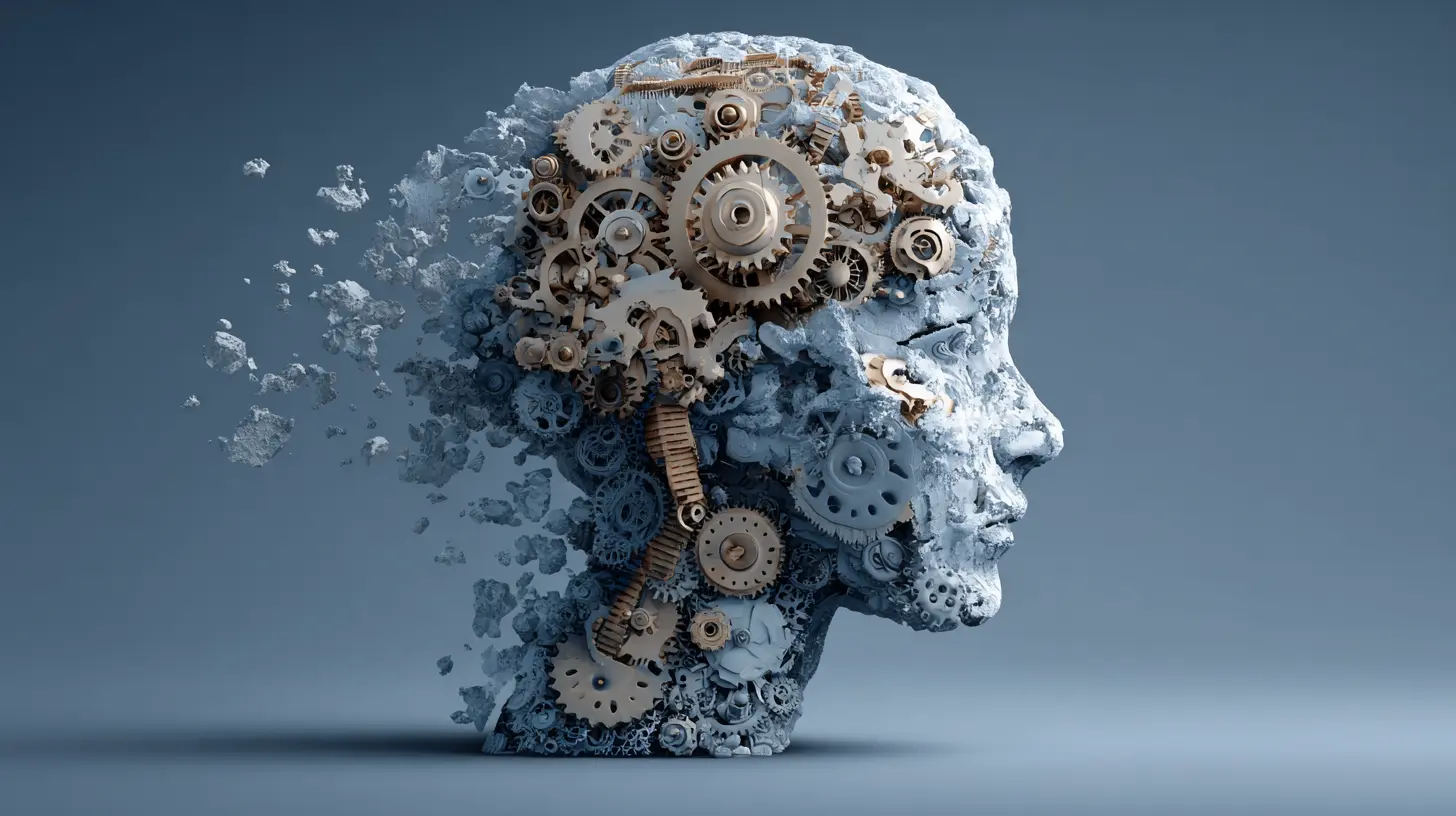
Strategy 2: Forge Unshakeable Emotional Resilience
Resilience isn’t a trait you’re born with; it’s a set of skills you build. By 2026, emotional resilience will be less about bouncing back and more about growing through.Develop Your Emotional Granularity. Most of us operate with a basic emotional vocabulary: sad, mad, glad. But what about the nuanced difference between feeling melancholy, disappointed, despairing, or wistful? High granularity—the ability to pinpoint the exact emotion—is like having a detailed map. It allows you to navigate the terrain effectively. Use an emotion wheel (easily found online) to label your feelings with more precision. Naming an emotion with specificity is the first step to taming it.
Implement "Micro-Restoratives." We think of recovery as vacations or spa days, but resilience is built in the small moments between stressors. A micro-restorative is a 30-90 second practice that resets your nervous system. It could be: looking out the window at a tree and truly seeing its leaves, three deep diaphragmatic breaths with a long exhale, feeling the texture of your desk, or savoring a single sip of tea. Scatter these throughout your day, especially before and after known stressors. They act as circuit breakers, preventing emotional overload.
Cultivate Strategic Optimism (Not Blind Positivity). Blind positivity ("everything will be fine!") crumbles under pressure. Strategic optimism is different. It involves two steps: First, honestly and clearly envisioning the best possible outcome of a challenge. Then, pragmatically identifying the specific actions you can take to make that outcome more likely. This couples hope with agency. It tells your brain, "The future is uncertain, but I have a role in shaping it." That sense of agency is the bedrock of resilience.

Strategy 3: Claim Your Digital Sovereignty
This is the frontier of mental fitness. If your mind is a kingdom, digital sovereignty means you are the monarch, not the apps vying for your attention.Practice "Attention Audits." Your attention is your most precious cognitive resource. Where are you donating it? For one week, track it without judgment. How many minutes are spent in reactive scrolling versus deep work? On outrage-driven content versus constructive learning? The audit isn’t about guilt; it’s about awareness. You can’t manage what you don’t measure.
Design Your Digital Environment. You are the product of your environment, and your digital environment is now a massive part of that. Get ruthless:
* Turn off ALL non-human notifications. Let your phone be a tool you use, not a slot machine that uses you.
* Use website blockers during focus hours. Freedom or Cold Turkey can be game-changers.
* Curate your feeds aggressively. Unfollow, mute, and prune anything that leaves you feeling anxious, envious, or drained. Actively follow accounts that inspire, educate, and uplift.
* Create "Sacred Tech-Free Zones." The bedroom is the most important one. Charge your phone outside of it. Your sleep and subconscious will thank you.
Embrace "JOMO" (The Joy of Missing Out). FOMO is the engine of digital anxiety. JOMO is the antidote. It’s the profound pleasure of being present in your chosen reality—a quiet evening, a deep book, an uninterrupted conversation—knowing that the chaotic digital stream is flowing without you, and that’s perfectly okay. It’s the realization that by missing out on the trivial, you are fully available for the meaningful.
Strategy 4: The Foundational Triad: Sleep, Movement, Nutrition
You cannot software-upgrade a mind running on faulty hardware. These are non-negotiable.Sleep: The Ultimate Cognitive Enhancer. By 2026, we’ll view sleep not as downtime, but as the brain’s most critical administrative work period. It’s when memories are consolidated, emotional experiences are processed, and metabolic waste is cleared from neural tissues. Prioritizing 7-9 hours of quality sleep is the single most effective mental fitness strategy. It’s not lazy; it’s strategic.
Movement: The Brain's Fertilizer. Physical exercise, particularly aerobic exercise, releases Brain-Derived Neurotrophic Factor (BDNF). Think of BDNF as Miracle-Gro for your brain cells. It strengthens neurons, encourages new connections, and boosts mood. You don’t need to train for a marathon. A daily 30-minute brisk walk is a potent dose of brain fertilizer.
Nutrition: Fuel for Thought. The gut-brain axis is a real, bi-directional highway. A diet high in processed foods, sugar, and unhealthy fats fuels inflammation, which can cloud thinking and dampen mood. A diet rich in omega-3s (found in fish, walnuts), antioxidants (berries, leafy greens), and fermented foods (yogurt, kimchi) supports a healthy gut microbiome and a clear, resilient mind. Hydrate. Your brain is about 75% water. Even mild dehydration impairs concentration.
Putting It All Together: Your 2026 Mental Fitness Protocol
This might feel like a lot. The key is not to implement everything at once, but to start small and build systems.1. Start with One Pillar. Pick the weakest pillar in your life right now—is it digital chaos, cognitive rigidity, or emotional volatility? Focus there for one month.
2. Habit Stack. Attach a new micro-habit to an existing one. "After I pour my morning coffee, I will do one minute of breathwork." "Before I open my first social media app, I will state my intention for using it."
3. Schedule Your Fitness. Block time for "cognitive agility" (reading that challenging article) and "digital decluttering" just as you would a meeting. Make it non-negotiable.
4. Find Your Community. Mental fitness is not a solo sport. Discuss these concepts with friends, join a book club focused on challenging topics, or find an accountability partner for your digital detox goals.
Future-proofing your mind is an ongoing, compassionate practice. There will be days you feel digitally enslaved, cognitively sluggish, or emotionally frayed. That’s not failure; it’s data. It’s feedback for your next adjustment.
The goal for 2026 isn’t to create an impervious, robotic mind. It’s to cultivate a mind that is wonderfully, resiliently human—capable of deep focus and broad creativity, of feeling profound joy and navigating sorrow, of engaging with technology without being consumed by it. It’s about building a mind that can not only withstand the future but meet it with curiosity, grace, and strength. The time to start training is now.
all images in this post were generated using AI tools
Category:
Mental FitnessAuthor:

Eliana Burton
Discussion
rate this article
2 comments
Mackenzie Peterson
Oh great, just what I needed-another list of ways to be mentally fit for the future...
June 21, 2026 at 2:40 AM
Eliana Burton
I get that it can feel overwhelming. My hope is to provide useful strategies that make a real difference.
Jessica Mullen
Future-proofing your mind? Great! I’ll start by memorizing where I left my glasses—oh wait, they’re on my head! Mental fitness, here I come—one giggle at a time!
April 23, 2026 at 3:34 PM
Eliana Burton
Glad to hear you're taking it with humor! Every little giggle counts in the journey of mental fitness. Keep that positivity flowing!