Adapting to Change: Mental Tools for an Uncertain World
16 October 2026
Uncertainty is not a temporary condition to be waited out. It is the baseline state of human life, and the past several years have made that fact harder to ignore. Jobs shift, industries reorganize, relationships end, health falters, economies swing, and the plans we build on solid ground turn out to rest on sand. The question is not whether change will come. It is whether you have the mental equipment to meet it without losing your footing.
Most advice on adaptability falls into two camps. One camp says to stay positive, practice gratitude, and trust the process. The other says to build systems, diversify your skills, and control what you can. Both contain truth, but neither is sufficient on its own. Positivity without structure becomes denial. Structure without emotional regulation becomes brittle. What actually helps is a set of mental tools that work together, each covering a weakness the others leave exposed.
This article lays out those tools. It explains why they work, when they backfire, and what to watch for before you adopt them. The goal is not to eliminate uncertainty. That is impossible. The goal is to function well inside it.
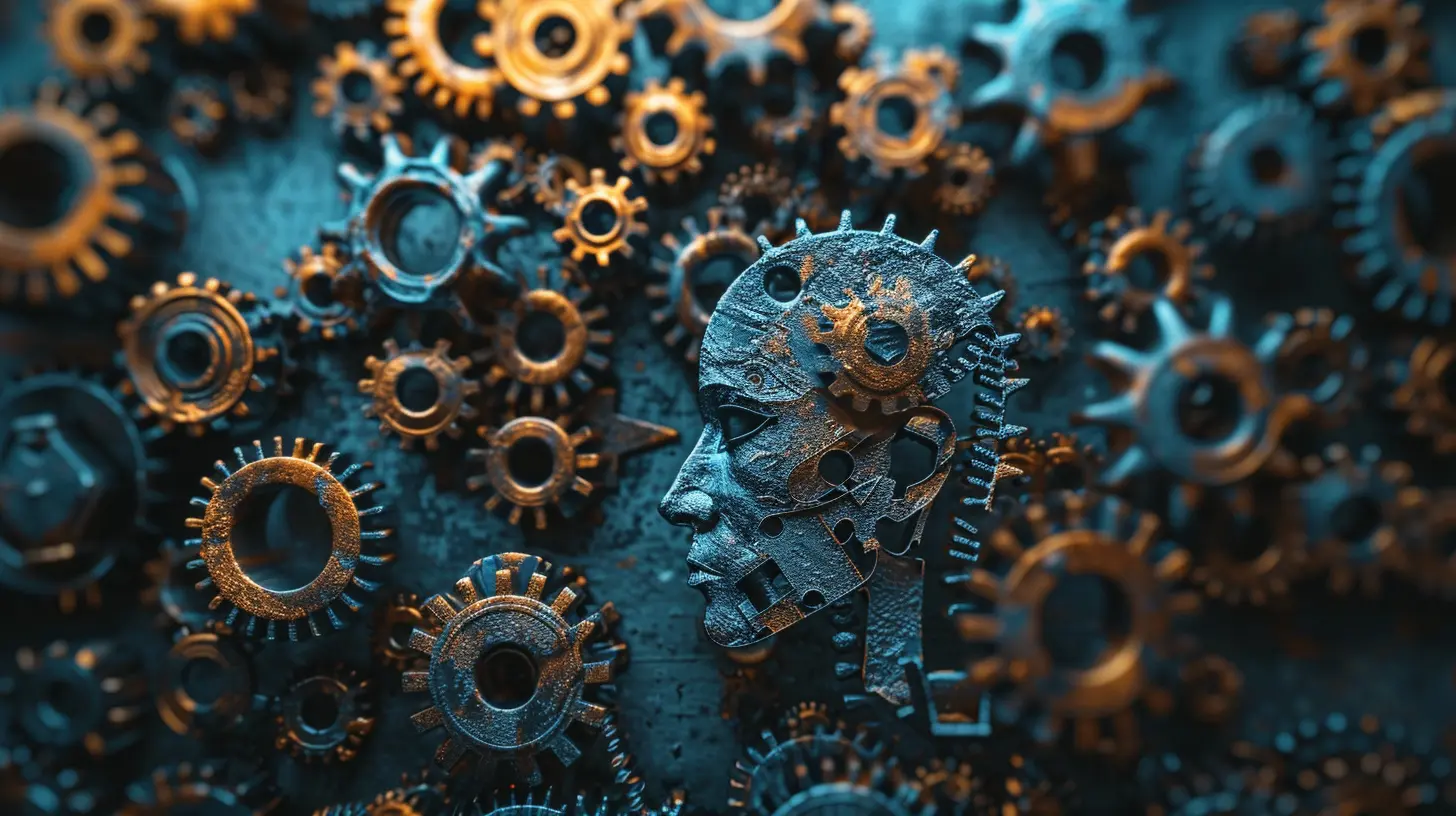
Why Uncertainty Feels So Threatening
Before reaching for tools, it helps to understand what you are actually up against. The human brain evolved to detect threats quickly and to prefer predictable environments. Predictability conserves energy. When you know what comes next, you do not have to stay alert. When you do not know, your nervous system stays switched on, scanning for danger.This is not a flaw. It is a survival mechanism that kept your ancestors alive. The problem is that the modern world generates uncertainty at a pace and scale the mechanism was never designed for. A looming deadline, a rumored layoff, a fluctuating market, a health scare you are waiting to hear about. None of these are physical predators, but the brain responds in similar ways. Attention narrows. Sleep suffers. Decision-making degrades.
There is also a cognitive dimension. Uncertainty removes the ability to plan, and planning is one of the primary ways humans regulate anxiety. When you cannot plan, you lose a coping strategy at the exact moment you need it most. This is why people under sustained uncertainty often describe a feeling of being unmoored, even when nothing catastrophic has happened yet.
Understanding this matters because it changes what you aim for. You are not trying to feel calm about uncertainty. You are trying to build habits and thought patterns that let you act well even when you do not feel calm.

Tool One: Separate What You Control From What You Do Not
The oldest and still most useful mental tool for dealing with change is the control distinction. It appears in Stoic philosophy, in cognitive behavioral therapy, and in countless practical frameworks. The core idea is simple: sort the situation into what you can influence, what you can partially influence, and what is entirely outside your reach.The reason this works is that it redirects finite mental energy. Anxiety tends to attach itself to the uncontrollable, because that is where the threat lives. But effort spent there produces nothing except more anxiety. Effort spent on the controllable produces action, and action reduces the sense of helplessness.
Consider a realistic scenario. Your company announces a restructuring. You do not control whether your role survives. You do control whether your work is visible, whether your relationships across the organization are strong, whether your skills are current, and whether you have a financial buffer. Those are not guarantees, but they are levers. The person who spends the next month refreshing news sites and speculating with colleagues is not preparing. The person who updates their portfolio and reaches out to three contacts is.
Where This Tool Fails
The control distinction becomes harmful when it turns into self-blame. People sometimes use it to conclude that if something went wrong, they must not have controlled enough. That is a misreading. The point is to direct effort, not to assign responsibility for outcomes you never had power over. Job losses, market crashes, and illnesses are not moral failures.It also fails when the situation is genuinely uncontrollable and requires acceptance rather than action. In those cases, the tool should shift from "what can I do" to "what can I let go of." That is a different move, and it takes practice.

Tool Two: Build Tolerance for Not Knowing
Most people try to escape uncertainty by resolving it. They seek reassurance, research endlessly, or make premature decisions just to end the discomfort. This works briefly and then backfires, because it teaches the brain that uncertainty is intolerable and must be eliminated.A more durable approach is to increase your capacity to sit with not knowing. This is a skill, not a personality trait. It develops the same way physical endurance does, through repeated manageable exposure.
One practical method is to label the state without judgment. When you notice yourself spiraling, name it plainly: "I do not know what will happen, and I am uncomfortable." This sounds trivial, but it interrupts the loop. The brain treats named experiences differently from unnamed ones. Naming creates a small distance between you and the feeling.
Another method is to set a worry window. Choose a specific time each day, fifteen or twenty minutes, and allow yourself to think about the uncertain situation fully during that window. Outside it, when the thoughts arise, note them and postpone. This is not suppression. It is scheduling. Over time, many people find that the urgency of the worry fades, partly because it has been given a place and partly because the feared outcome rarely materializes in the way imagined.
The Trade-Off
Tolerance for uncertainty is not the same as passivity. If you tolerate too much, you can drift into avoidance. The tool works best when paired with the control distinction. Tolerate what you cannot change. Act on what you can.
Tool Three: Cognitive Reframing Without Toxic Positivity
Reframing means changing the interpretation of a situation, not the situation itself. It is one of the most studied techniques in psychology, and it works because meaning drives emotion. Two people can face the same event and respond very differently based on what they believe it means.A layoff can mean "I am worthless" or "my role was eliminated in a restructuring." The first interpretation is global and permanent. The second is specific and temporary. Research on explanatory style consistently shows that people who default to specific, temporary explanations recover faster and function better than those who default to global, permanent ones.
Reframing is not about pretending everything is fine. That is toxic positivity, and it usually makes things worse because it forces you to suppress real emotion while performing a calm you do not feel. Genuine reframing acknowledges the difficulty and then asks a more useful question: what else is true here?
A Concrete Example
Suppose a long-term relationship ends. The toxic positivity response is "everything happens for a reason" or "you will be stronger for this." Those statements may be true in time, but they land as dismissals in the moment. A reframe sounds more like: "This is painful and I did not choose it. It also frees time and energy I had been pouring into something that was not working. I do not have to know what comes next yet."Notice the difference. The reframe does not deny the loss. It expands the frame to include other realities that are also true. This is what makes it sustainable. You are not lying to yourself. You are refusing to let one interpretation monopolize the whole picture.
When Reframing Backfires
Reframing should not be used to bypass grief, trauma, or legitimate anger. Some experiences need to be felt before they can be reinterpreted. If you reframe too quickly, you risk what psychologists sometimes call spiritual bypassing, where emotional processing is skipped in favor of a calm surface. The emotion does not disappear. It goes underground and resurfaces later, often in less convenient forms.The rule of thumb: feel first, reframe second. If you cannot yet name what you feel, you are not ready to reframe it.
Tool Four: Identity Diversification
One of the most overlooked sources of fragility under change is identity concentration. When a single role carries most of your sense of self, any threat to that role becomes an existential threat. The executive whose entire identity is the job. The parent whose entire identity is the child. The athlete whose entire identity is the sport. When the role changes, the person does not just lose a position. They lose themselves.Identity diversification means cultivating multiple sources of meaning and self-definition. This is not about being shallow or uncommitted. It is about not staking everything on one pillar. A person might be a professional, a friend, a hobbyist, a neighbor, a learner, a family member. Each role provides a different kind of validation and a different kind of resilience.
The practical implication is that you should invest in these roles before you need them. Building a hobby during a crisis is much harder than maintaining one you already have. The same goes for friendships, community ties, and physical health. These are not distractions from your main pursuit. They are ballast.
The Cost
Diversification takes time and energy, and there are seasons when concentration is the right call. A founder launching a company, a student preparing for a critical exam, a parent of a newborn. In those periods, narrowing focus is often necessary. The key is to recognize it as a season, not a permanent state, and to rebuild breadth when the season ends.
Tool Five: Scenario Thinking Instead of Prediction
Humans are terrible at predicting the future, and most of us know it. Yet we keep trying, because prediction feels like control. Scenario thinking offers a better alternative. Instead of asking "what will happen," you ask "what are several plausible ways this could unfold, and how would I respond to each."This is a technique used in strategic planning, but it scales down to personal life. If you are facing a possible job change, you might sketch three scenarios: you stay in your current role, you move to a similar role elsewhere, you shift to a different kind of work entirely. For each, you note what it would require, what it would cost, and what you would need to learn.
The benefit is not accuracy. It is preparation and emotional regulation. When you have already imagined a scenario, encountering it feels less like a shock and more like a variation on something familiar. You have pre-loaded responses. You have reduced the number of decisions you need to make in the moment.
Common Mistake
People often turn scenario thinking into catastrophizing. They generate only negative scenarios and rehearse them until they feel inevitable. That defeats the purpose. A useful scenario set includes neutral and positive possibilities, and it stays at the level of "what would I do" rather than "how awful would this be."Tool Six: Values as a Compass
When the external world is unstable, internal stability becomes more valuable. Values provide that. A value is not a goal. Goals can be achieved or blocked. Values are directions you can move in regardless of circumstances. Honesty, curiosity, care for others, craftsmanship, courage, fairness. These are available to you in almost any situation.The reason values matter under uncertainty is that they give you a basis for action when outcomes are unclear. You may not know whether a decision will work out. You can still know whether it aligns with who you want to be. That alignment is a source of integrity that does not depend on results.
A practical exercise: when facing a difficult choice, ask not only "what will produce the best outcome" but "what would the person I want to be do here." The two questions often point in the same direction. When they do not, the second one protects you from choices you would regret even if they succeeded.
Tool Seven: Action as an Antidote to Rumination
Rumination is repetitive thinking about a problem without movement toward a solution. It feels productive. It is not. It correlates strongly with anxiety and depression, and it tends to make problems feel larger and more permanent than they are.The most reliable way out of rumination is action, even small action. Not because the action solves everything, but because it breaks the loop and restores a sense of agency. Cleaning a room, sending one email, going for a walk, writing a single paragraph. The content matters less than the shift from passive to active.
This is why the control distinction and action work so well together. The control distinction tells you where to direct effort. Action delivers the effort. Together, they convert a vague, overwhelming situation into a series of concrete moves.
A Caution
Action can also become avoidance if it is used to escape feelings rather than address situations. Busyness is a common disguise for anxiety. The test is whether the action moves you toward something you care about or simply distracts you from something you would rather not feel. Both have their place, but they are not the same.Putting the Tools Together
No single tool handles uncertainty on its own. The control distinction without tolerance becomes frustrated striving. Tolerance without action becomes resignation. Reframing without feeling becomes denial. Identity diversification without focus becomes diffusion. Values without action become sentiment. Action without values becomes drift.The tools work as a system. When uncertainty hits, the sequence often looks like this. First, regulate enough to think. Second, sort what you control from what you do not. Third, reframe the situation without denying it. Fourth, act on the controllable. Fifth, lean on diversified identity and values to stay grounded. Sixth, use scenario thinking to prepare for multiple futures without trying to predict one.
This is not a linear process. You will move back and forth. You will forget tools you know well. That is normal. The point is not perfect execution. It is having more options than you would have had otherwise.
What to Expect Over Time
Adaptability is not a fixed trait. It is a set of skills that improve with use. People who have navigated significant change often report that later challenges feel more manageable, not because the challenges are smaller but because their capacity is larger. This is sometimes called post-traumatic growth, though the term is used loosely and should not be applied to every difficult experience.What improves with practice is not the absence of fear or uncertainty. It is the speed with which you recover, the range of responses available to you, and the confidence that you have survived hard things before. That confidence is earned, not granted. It comes from doing the work when the stakes are real.
Final Thoughts
Uncertainty is not going away. The world is complex, interconnected, and fast-moving, and no amount of planning will make it fully predictable. What you can do is build a mind that bends instead of breaking. That means tolerating not knowing, acting where you can, reframing without lying to yourself, and rooting your identity in more than one place.None of this is easy. It is also not optional. The people who adapt well are not the ones who avoid change. They are the ones who have practiced meeting it.
all images in this post were generated using AI tools
Category:
Mental FitnessAuthor:

Eliana Burton