Rethinking the Marshmallow Test: Home Environment May Matter More Than Willpower
November 3, 2026 - 10:54
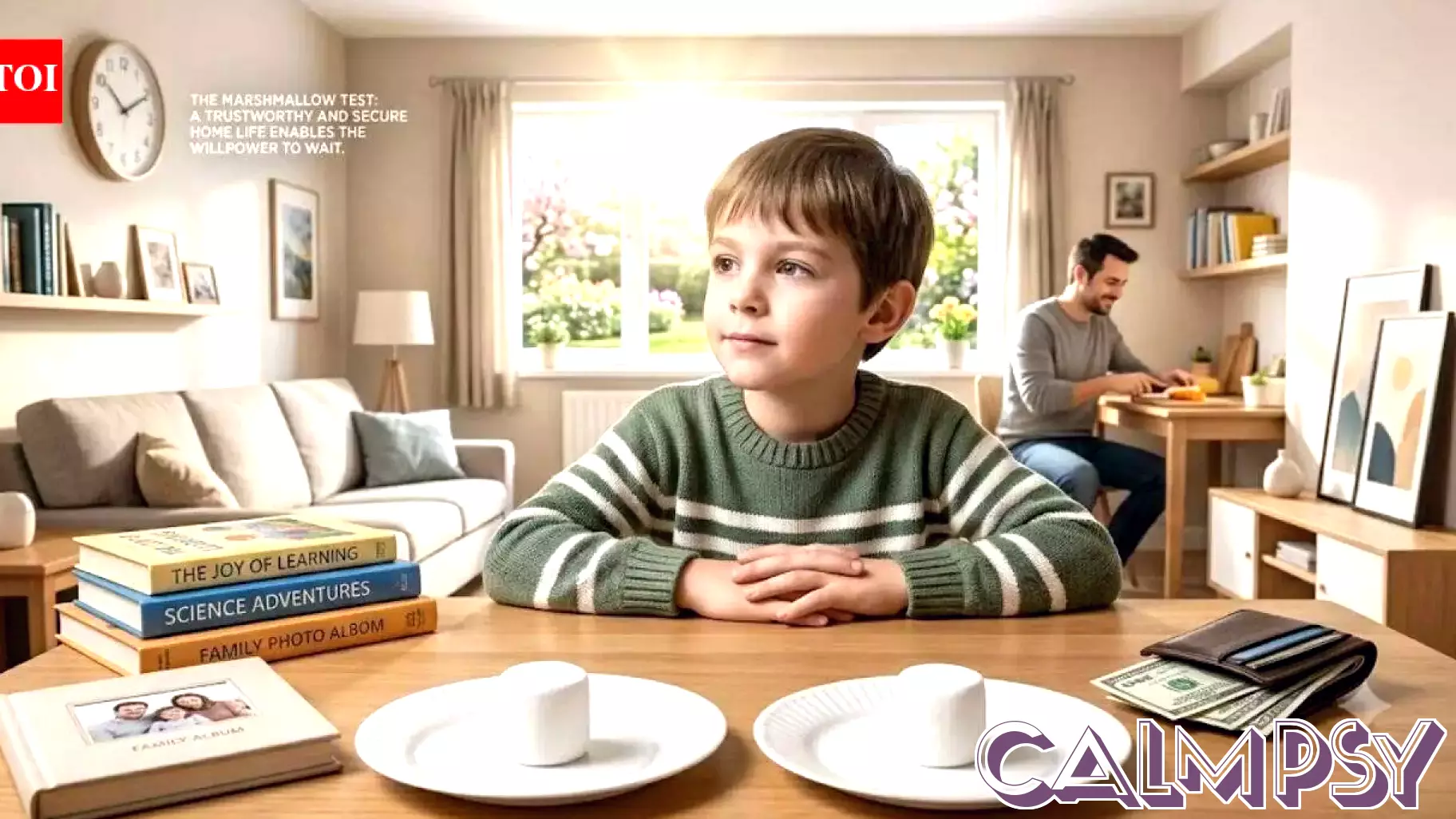
Imagine placing one marshmallow in front of a four-year-old and telling them they can eat it now or wait until an adult returns to receive a second one. Some children wait patiently. Others grab the treat almost immediately. For decades, this famous experiment has been used to measure self-control and predict future success, with children who waited often described as having better willpower and brighter prospects. But new psychological research suggests the test may reveal far more about a child's home life than their self-discipline.
The marshmallow test became one of the most cited studies in psychology after researchers found that children who delayed gratification tended to score higher on academic and behavioral measures years later. The implication seemed clear: willpower in early childhood predicted later achievement. However, recent analysis has raised questions about that conclusion. When researchers accounted for family income, parental education, and the stability of a child's environment, the predictive power of the test shrank considerably.
The revised interpretation focuses on what waiting actually signals. Children who grow up in unpredictable settings may learn that promised rewards do not always arrive, so taking what is available now becomes a rational choice rather than a failure of self-control. A child who has experienced broken promises or scarcity has little reason to trust that a second marshmallow will ever appear. In contrast, children from stable, well-resourced homes may wait because their experience tells them that adults keep their word.
This perspective shifts the conversation away from blaming children for weak willpower and toward understanding the conditions that shape their decisions. It also cautions against using a single snack-based task to judge a child's potential. The marshmallow test, researchers now argue, is less a crystal ball for future success and more a window into the reliability of a child's world. What looks like impulsiveness may simply be adaptation to circumstances beyond a four-year-old's control. Understanding that distinction could change how parents, teachers, and policymakers support children facing instability at home.
MORE NEWS

November 2, 2026 - 23:27
Walking With Hands Behind Your Back: What Psychology Actually SaysA recent viral claim suggests that people who walk with their hands clasped behind their back are not acting out of habit but are deliberately promoting reflection and calmness. The posts frame the...

November 2, 2026 - 07:32
F1 World Champion, Kimi Antonelli enjoys washing his car by hand. The psychology behind the everyday choreFormula 1 world champion Kimi Antonelli says he enjoys washing his car by hand, taking the time to clean and dry it properly rather than rushing through the task. The routine offers a quiet...

November 1, 2026 - 23:43
House Report Faults APA Leadership Over Antisemitism ResponseA report released by a US House committee has concluded that the American Psychological Association failed to address antisemitism within its ranks, describing the problem as systemic and charging...

November 1, 2026 - 00:40
The Psychology Behind Faking Cancer: When Deception Destroys Lives and Drains MillionsAcross the world, people have been drawn into elaborate cancer deceptions. The question of why someone would fabricate such an illness cuts to the heart of human psychology and the darker corners...