Psychology says you'll often agree with the crowd, even when your gut says otherwise
July 17, 2026 - 15:18
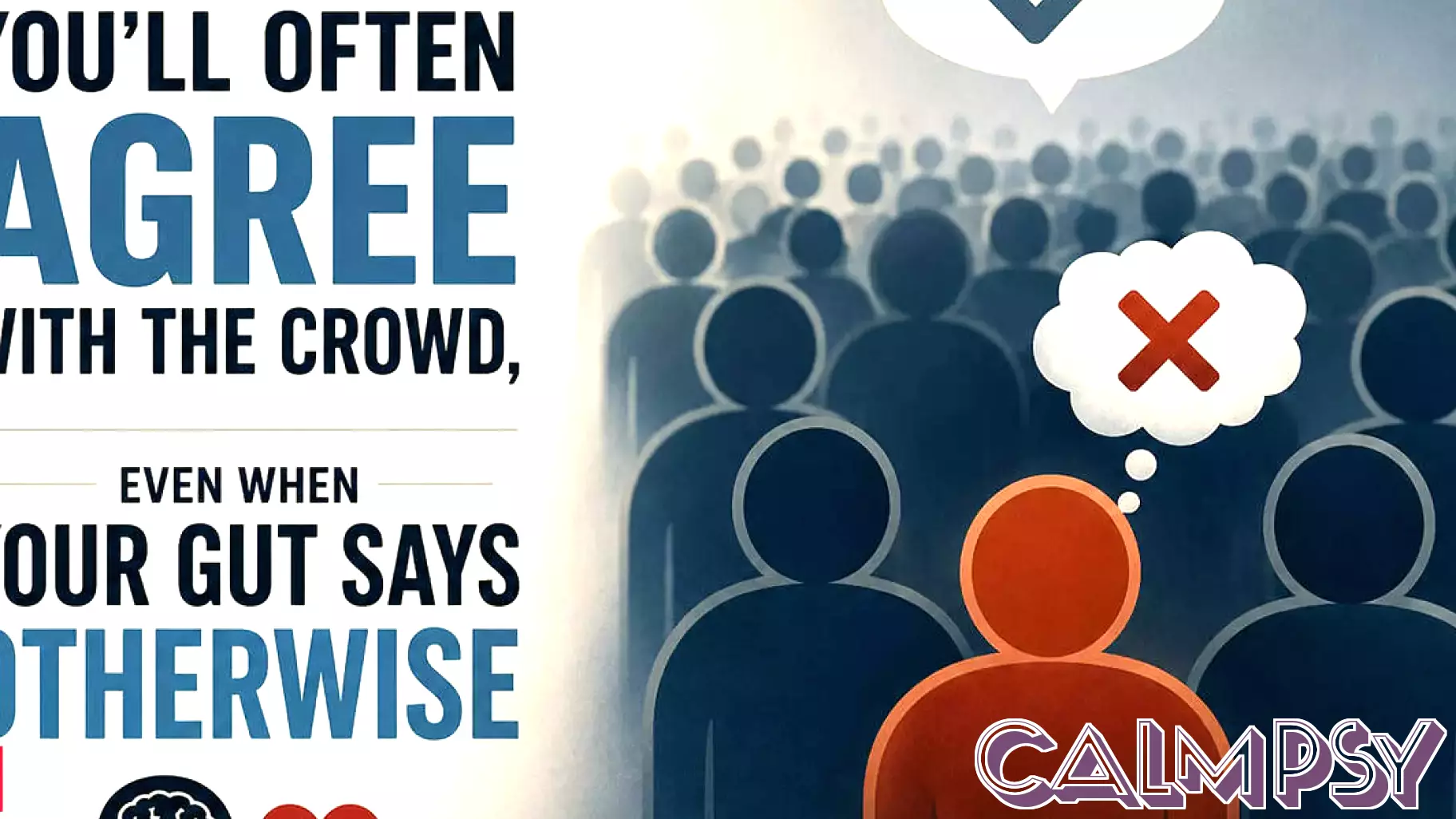
Have you ever nodded along in a meeting, only to realize later you actually disagreed with everyone? You are not alone. Decades of research show that humans have a powerful tendency to conform to group opinions, often overriding their own instincts. This happens because we crave acceptance and want to avoid conflict or rejection.
The classic proof comes from psychologist Solomon Asch's experiments in the 1950s. He put people in a room with actors who deliberately gave wrong answers to a simple visual test. Time and again, the real participants went along with the incorrect group, even when their own eyes told them otherwise. They doubted their own perception just to fit in.
Psychologists break this down into two main drivers. Normative influence is the desire to be liked and accepted. Informational influence happens when we assume the group knows more than we do, especially in uncertain situations. Both can make us suppress our own judgment.
More recent neuroscience studies show that social pressure does not just change your behavior. It can actually alter your brain activity and perception. When you disagree with a group, your brain may literally adjust what you see or believe to reduce the mental discomfort. So the next time you feel that tug to go along, remember: your gut might be right, even if the crowd is loud.
MORE NEWS

October 15, 2026 - 11:40
Why Financially Secure People Still Feel Guilty at Expensive RestaurantsMany people who can comfortably afford a high-end meal still feel a knot of discomfort when the bill arrives. Psychology offers some explanations for this contradiction, and they often trace back...

October 14, 2026 - 18:30
US Military Denies Iranian Allegations of Psychological Pressure on Civilian SailorsThe United States military has pushed back against claims made by an Iranian official who alleged that American forces are subjecting civilian sailors to serious stress and psychological pressure...

October 14, 2026 - 14:18
How Russia Uses Information and Psychological Operations Against UkraineRussia continues to wage a parallel war against Ukraine in the information space, relying on psychological operations designed to intimidate citizens, discredit the authorities, and erode trust in...

October 13, 2026 - 22:24
Mental Health Struggles Double for Survivors of Intimate Partner ViolencePeople who survive intimate partner violence face a much higher risk of mental health conditions than the general population. Research shows that mental disorders are twice as common among...