The Link Between Sleep and Depression in a Modern World
17 October 2026
It is 1:47 in the morning. You have scrolled past three videos of strangers renovating cabins, checked an email you already read at dinner, and told yourself twice that you would put the phone down "in five minutes." Your body is tired in that heavy, sand-in-the-eyes way, but your mind is humming. Tomorrow you will wake up at 6:30, drag yourself through the day on caffeine, snap at someone you love, and wonder why everything feels flat and pointless.
That loop is not a character flaw. It is a biological feedback system, and it runs in both directions. Poor sleep feeds depression, and depression wrecks sleep. Understanding that circuit, and where you can actually intervene, is one of the most practical things you can do for your mental health.
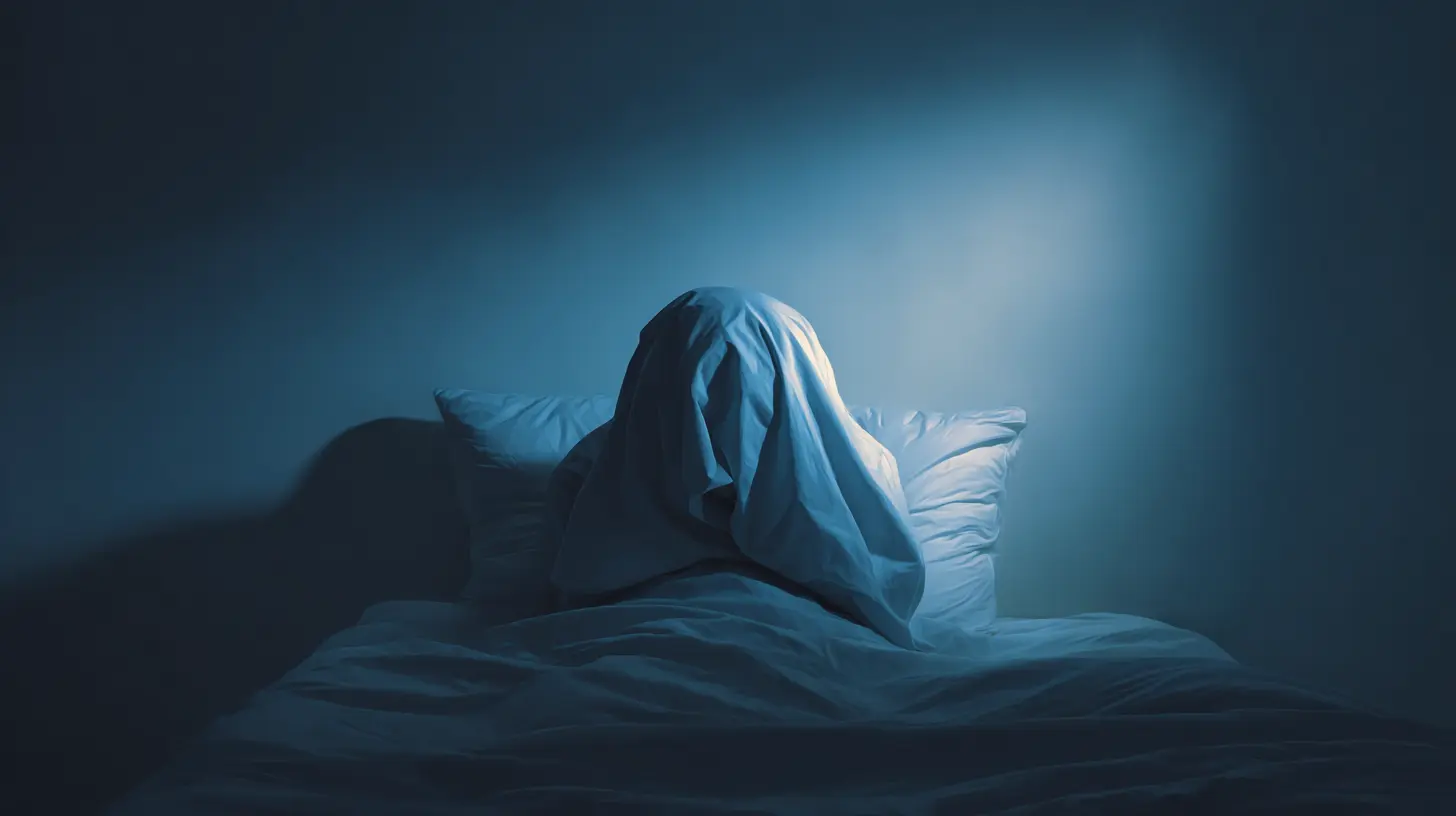
Why This Relationship Is Not Simple
Most people assume sleep problems are a symptom of depression. You feel low, so you sleep badly. That is true as far as it goes, but it is only half the picture.Research over the past two decades has repeatedly shown that insomnia often shows up before a depressive episode, not after. In many people, disrupted sleep is an early warning sign rather than a downstream effect. This matters enormously, because it means sleep is not just a mirror of your mood. It can be a lever.
The relationship is best described as bidirectional and self-reinforcing. Bad sleep lowers your mood. Low mood makes it harder to sleep. Each night of poor rest makes the next day slightly harder to cope with, and the coping strategies people reach for, like staying in bed late, napping for three hours, or drinking to fall asleep, tend to make the following night worse. The system spirals.
The Two-Way Street, Explained
Think of it like a conversation between two parts of yourself that never get to finish a sentence. During deep sleep, your brain does repair work: it consolidates emotional memories, regulates stress hormones, and clears metabolic waste. When that process is cut short, your emotional regulation systems run on a deficit the next day.At the same time, depression changes your sleep architecture. People with depression often show reduced slow-wave sleep, more fragmented REM sleep, and a tendency to wake in the early hours and be unable to fall back asleep. So the very state that should restore you is the state that depression disturbs. Neither side gets to rest.
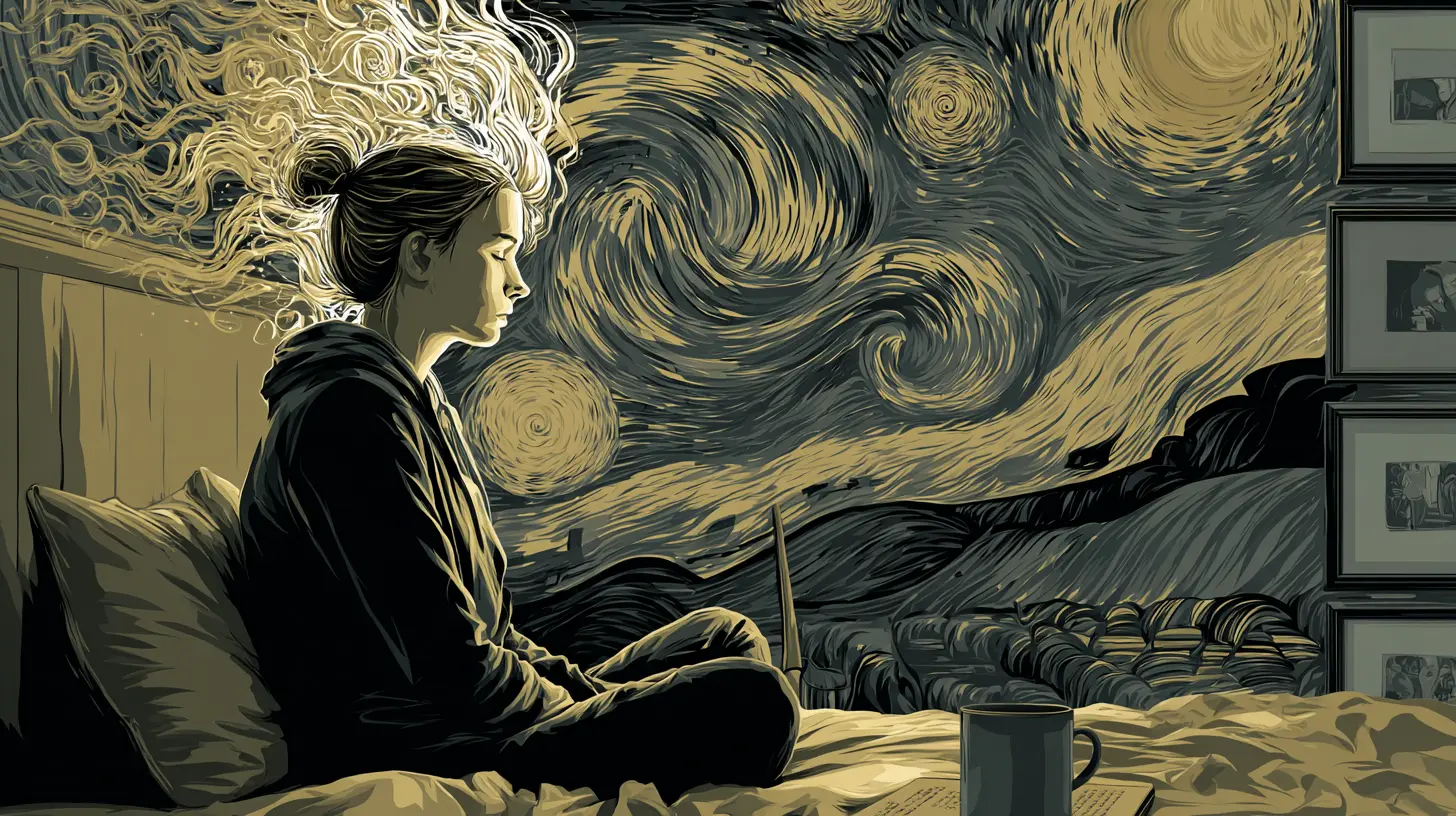
What Actually Happens in Your Brain and Body
To make good decisions about your sleep, it helps to know what is being disrupted.Emotional Processing Overnight
During REM sleep, your brain replays emotional experiences with the stress chemistry dialed down. In simple terms, it files the feeling while softening the sting. This is why a problem that felt unbearable at midnight often seems manageable in the morning.When REM is fragmented or mistimed, that filing job gets done badly. Emotional memories stay raw. You wake up carrying yesterday's weight plus today's. Over weeks, this accumulates into a background sense of dread or numbness that looks a lot like depression.
The Stress Hormone Rhythm
Cortisol should peak shortly after you wake and fall steadily through the day. In depression and in chronic insomnia, this curve flattens or shifts. Cortisol may stay elevated in the evening, which makes it hard to wind down, and be blunted in the morning, which makes it hard to get up. The result is a day that feels both exhausting and unrefreshing at the same time.Inflammation and the Slow Burn
Sleep loss raises markers of inflammation. Chronic low-grade inflammation has been linked to depression in a subset of people. This does not mean poor sleep causes depression in a simple, single-cause way. It means sleep is one of several biological channels through which prolonged stress can wear down mood regulation.
Why the Modern World Makes This Worse
Our ancestors did not have blue light at eye level at 11 p.m., nor did they have a global news feed designed to keep them engaged through outrage. The modern environment stacks several sleep-hostile forces on top of each other.Light at the Wrong Time
Morning light tells your internal clock that the day has begun. Evening light tells it to delay. Most of us get the opposite of what we need: dim indoor light all morning and bright screens all evening. This pushes the clock later, which shortens sleep, which raises depression risk.The Anxiety of the Unfinished Day
For many people, late night is the only time nobody is asking anything of them. That quiet hour becomes precious, so they protect it by staying up. Psychologists sometimes call this revenge bedtime procrastination. It is not laziness. It is a rational response to a day with no breathing room. The trade-off, though, is brutal: you pay for that hour with the following day's mood and focus.Alcohol, Caffeine, and the Illusion of Help
A drink before bed can make you fall asleep faster. It also fragments sleep in the second half of the night and suppresses REM. So you get quantity without quality, and you wake at 3 a.m. with a racing heart. Caffeine after early afternoon lingers far longer than most people realize, quietly shrinking your sleep window even when you feel fine falling asleep.Shift Work and Social Jet Lag
Working nights, or simply going to bed at wildly different times across the week, desynchronizes your clock. The body never fully adapts to a schedule that flips. People in these patterns show higher rates of mood problems, and the effect is worse when the schedule is unpredictable rather than stable.
The Chicken-and-Egg Problem, and Why It Does Not Matter as Much as You Think
Clients often ask me which came first. The honest answer is that for most people it is impossible to untangle, and it is not the most useful question.What matters is that the loop has two entry points. If you improve sleep, mood often improves even when you have not directly worked on mood. If you treat depression, sleep often improves as a side effect. In practice, the fastest route out is usually to work on both at once, starting with whichever is more tractable.
If you can control your bedtime but not your grief, start with sleep. If your sleep is a mess because your life is a mess, start with the life problem and treat sleep as a supporting player. There is no universal correct order.
Practical Strategies That Actually Move the Needle
Below is a layered approach, from foundation to fine-tuning. You do not need all of it. You need the two or three pieces that fit your life.Anchor Your Wake Time First
This is the single highest-leverage change for most people. Pick a wake time you can hit seven days a week, including weekends, and protect it. Bedtime will follow within a week or two, because sleep pressure builds on a schedule.Why it works: your circadian clock is set primarily by when light hits your eyes in the morning, not by when you go to bed. A stable wake time stabilizes the whole system.
Common mistake: trying to fix sleep by going to bed earlier. If you are not sleepy, you will lie there frustrated, and your brain will start associating bed with anxiety. Fix the morning, and the night takes care of itself.
Get Bright Light Within an Hour of Waking
Ten to thirty minutes of outdoor light, or a bright light box if you live somewhere dark, tells your clock it is daytime. This advances your sleep timing and lifts mood. Morning light is one of the few interventions that improves both sleep and depression at the same time.Build a Landing Strip, Not a Cliff
You cannot sprint from a stressful day straight into sleep. Give yourself 30 to 60 minutes of low-stimulation time before bed. Dim the lights. Put the phone on a charger across the room. Do something boring and pleasant: a shower, stretching, reading paper, tidying a drawer.Why it works: it lowers arousal gradually, which is what sleep onset actually requires.
If You Cannot Sleep, Get Out of Bed
This is the core of cognitive behavioral therapy for insomnia, or CBT-I, the best-supported non-drug treatment for chronic insomnia. If you are awake for roughly 20 minutes and getting frustrated, get up, go to another room, and do something quiet until you feel sleepy. Then return.Why it works: it breaks the association between bed and struggle. That association, once formed, is what keeps insomnia alive long after the original trigger has passed.
When it is hard: the first week often feels worse, because you are sleeping less before you sleep better. This is normal. It is also why doing it with a trained therapist beats doing it alone.
Treat Sleep Apnea and Other Medical Causes
Loud snoring, gasping, morning headaches, and relentless daytime sleepiness are not personality traits. They can be signs of sleep apnea, which is strongly linked to depression and often misdiagnosed as it. If this sounds like you, get evaluated. No amount of sleep hygiene will fix a blocked airway.The same goes for thyroid problems, iron deficiency, chronic pain, and restless legs. Mood and sleep both improve when the underlying condition is treated.
Be Careful With Naps
A short nap of 20 to 30 minutes early in the afternoon can restore alertness without wrecking the night. A two-hour nap at 5 p.m. will steal your sleep pressure and push bedtime later. If you are depressed and sleeping badly, naps are a trade-off: they help you survive the day but can prolong the problem. Use them as a tool, not a habit.Rethink Your Relationship With Alcohol and Caffeine
If you drink to sleep, try a two-week experiment without it and see what your 3 a.m. looks like. If you use caffeine to compensate for poor sleep, you are borrowing energy at a high interest rate. Cut caffeine after noon for two weeks and judge for yourself.
Common Mistakes and Misconceptions
"I just need to catch up on weekends." Sleeping until noon on Saturday feels good and disrupts your clock for the next three days. Consistency beats compensation."Eight hours is the rule." Sleep need varies. Some people genuinely do well on seven, others need nine. The better question is whether you wake feeling restored and function well during the day.
"Melatonin will fix it." Melatonin is a timing signal, not a sedative. It can help shift your clock when used correctly, at the right dose and time. It is not a general sleep aid, and taking it at random times can make timing worse.
"If I exercise hard at night, I will sleep better." For some people, intense exercise within two hours of bed is activating, not tiring. Morning or afternoon movement tends to help sleep more reliably.
"Antidepressants will fix my sleep." Some help, some hurt. Certain antidepressants are sedating, others are activating. If your sleep got worse after starting a medication, that is worth a conversation with your prescriber, not something to endure silently.
When to Seek Professional Help
Consider talking to a doctor or therapist if any of the following apply:- You have been sleeping poorly for more than three nights a week for more than three weeks.
- You feel hopeless, numb, or unable to enjoy things you used to enjoy.
- You are using alcohol, cannabis, or sleep aids most nights to get to sleep.
- You have thoughts of harming yourself. This is a medical emergency. Reach out to a crisis line or emergency services immediately.
Two evidence-based options worth asking about: CBT-I for insomnia, which is typically delivered over four to eight sessions, and therapy or medication for depression. Many people benefit from both. If you can only do one, CBT-I is often a strong starting point because improving sleep frequently lifts mood on its own.
A Realistic Path Forward
You do not need to overhaul your life in one weekend. Pick one thing from this article. The most common best first move is a fixed wake time plus morning light. Do that for two weeks before adding anything else. If it does not help, add a wind-down routine. If that does not help, consider whether a medical issue or a mood issue needs attention.The point is not perfect sleep. The point is breaking the spiral long enough to see that the flatness you feel is not permanent, and that the 1:47 a.m. version of your life is not the whole story. Sleep is not a luxury you earn after everything else is done. It is the foundation the rest of your day is built on, and it is one of the few things in this chaotic world that responds to deliberate, patient effort.
all images in this post were generated using AI tools
Category:
Depression AwarenessAuthor:

Eliana Burton