The Future of Therapy: From Couch to Virtual Reality
26 October 2026
The image of therapy that most people carry around is stubbornly static: a leather couch, a box of tissues, a quiet room, and a therapist who mostly listens. That image is not wrong, but it is incomplete, and it is becoming less representative every year. The practice of psychotherapy is quietly undergoing one of the largest structural shifts in its history. The forces driving that shift are not primarily technological enthusiasm. They are access, cost, measurement, and a growing body of evidence that some people respond to immersive and digital formats in ways they never did to a traditional fifty-minute hour.
This article examines where therapy is actually heading, why certain innovations work while others fail, and what you should consider before choosing a format for yourself or someone you care about. It is written for people who want more than a list of apps. It is written for the reader who wants to understand the mechanics of change and the trade-offs involved in delivering it through new channels.
Why the Couch Model Has Limits
Traditional talk therapy is remarkably effective for many conditions. It also has well-known constraints that have little to do with the skill of clinicians.The first is geographic. Licensed therapists are bound by jurisdiction. A skilled clinician in one region may be legally unable to treat a patient a few hours away in another. This creates severe shortages in rural areas and in many public health systems, where waitlists for a single course of cognitive behavioral therapy can stretch for months.
The second is exposure. Exposure-based treatments, which are among the most effective interventions we have for anxiety disorders, obsessive-compulsive disorder, and phobias, require the patient to confront feared situations. The therapy room is a poor stage for that. A therapist can ask you to imagine a spider, or to hold one in a jar, but the actual feared context is usually elsewhere. This gap between the consulting room and the real world is one of the oldest practical problems in behavioral therapy.
The third is measurement. Most therapy sessions produce almost no structured data. A clinician forms impressions, a patient reports how the week went, and both move on. That is not a failure of clinicians. It is a limitation of the format. When treatment happens in a room without instrumentation, subtle changes in avoidance behavior, physiological arousal, or sleep go unrecorded.
The fourth is stigma and avoidance. A meaningful number of people who need help never walk into an office. They cancel, they postpone, or they convince themselves the problem is not serious enough. Any format that lowers the activation energy required to begin treatment has a real clinical advantage, not just a convenience advantage.
Virtual reality and digital delivery formats do not solve all of these problems. They solve some of them well, some of them partially, and they introduce new problems of their own. Understanding which is which is the whole point.

Virtual Reality as a Clinical Tool, Not a Gimmick
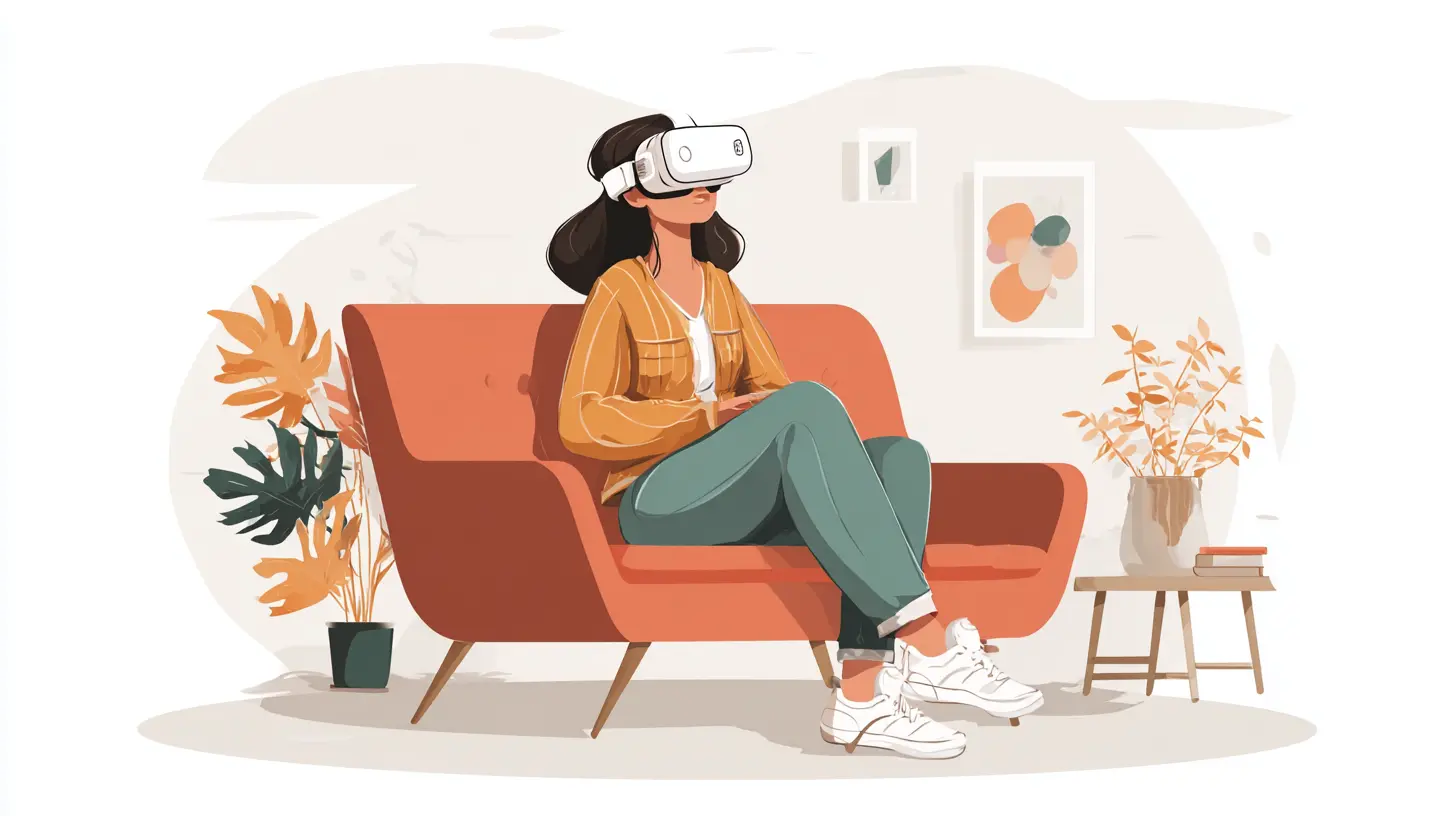
Virtual reality in mental health is often presented as a novelty. That framing undersells it. The strongest evidence for VR in psychotherapy concerns exposure-based treatment, and the reason is mechanistic rather than promotional.Exposure works through a process clinicians call inhibitory learning. The patient learns that a feared outcome does not occur, and that the fear response itself is tolerable and temporary. For that learning to generalize, the exposure needs to feel real enough to activate the fear, and it needs to vary enough that the brain does not simply memorize one safe scenario.
VR is unusually good at both. A well-designed virtual environment can produce genuine physiological arousal, including elevated heart rate and skin conductance, while remaining completely controllable. The therapist can dial the intensity up or down, repeat a scenario exactly, insert unexpected variations, and run exposures that would be impractical or dangerous in the real world. Someone with a fear of flying can sit in a virtual cabin and experience turbulence. Someone with social anxiety can deliver a presentation to a virtual audience that responds with graded levels of engagement or distraction. Someone with post-traumatic stress can be guided through a carefully constructed environment that resembles the trauma context without requiring them to physically return to it.
What the Evidence Actually Supports
The strongest and most consistent findings concern anxiety disorders, specific phobias, and post-traumatic stress. VR exposure therapy has been studied extensively for fear of flying, height phobia, social anxiety, and public speaking anxiety, and the general pattern is that it performs comparably to in-vivo exposure for many patients, sometimes with better tolerability because patients are more willing to begin.That last point matters more than it first appears. The biggest obstacle in exposure therapy is often refusal. Patients decline, or drop out early, because the prospect of confronting the real situation is too intimidating. VR lowers that barrier. A patient who would never agree to hold a spider may agree to enter a virtual room with one. Once they have done that successfully, the step to real-world exposure becomes smaller. VR functions as a bridge, not always as a destination.
For post-traumatic stress, VR-assisted exposure has been used as an adjunct to established trauma-focused protocols. The evidence is promising but more mixed than the marketing suggests, and it depends heavily on the quality of the clinical protocol surrounding the technology. The headset is not the treatment. The therapist's judgment about pacing, safety, and integration is the treatment.
Where VR Falls Short
VR is a poor fit for several common situations. Patients with active vestibular disorders may experience nausea. Patients with certain visual or neurological conditions may not tolerate headsets. Some people find the equipment claustrophobic, which is ironic given the purpose. And some patients simply do not become emotionally engaged in virtual environments; for them, the arousal never rises enough to make the exposure meaningful, and the session becomes a expensive video game.There is also a subtler problem. VR excels at simulating external situations. It is much weaker at simulating the internal, relational texture of therapy itself. The therapeutic alliance, which is one of the most reliable predictors of outcome across modalities, is built through human interaction. A headset does not replace that. It sits inside a treatment that still depends on a skilled clinician.
Teletherapy: The Shift That Already Happened
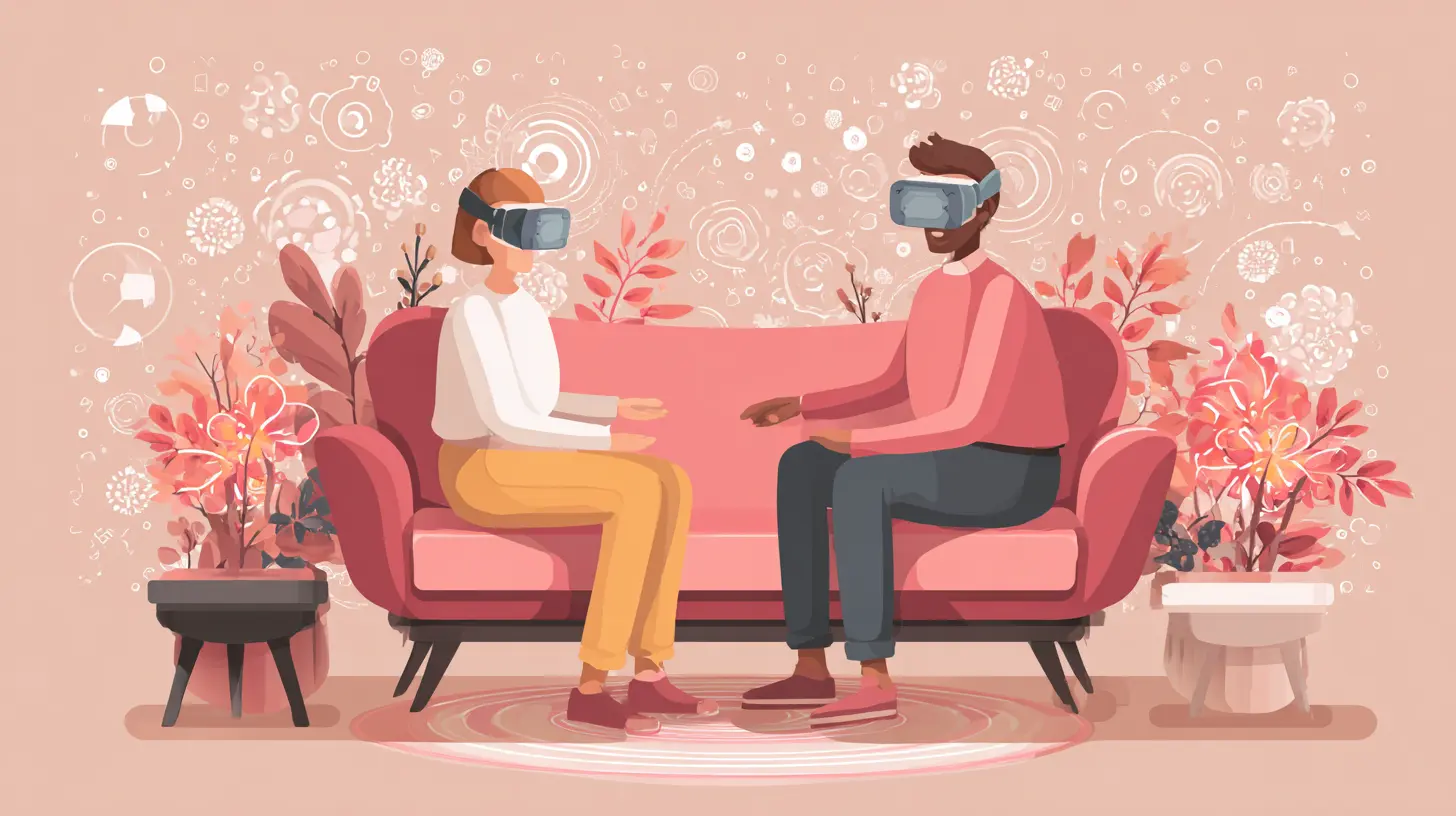
While VR attracts headlines, the largest change in therapy delivery has already occurred and is comparatively unglamorous: therapy moved onto video calls. This shift accelerated dramatically during the pandemic, and it has not reversed. Many clinicians now maintain hybrid practices, and many patients prefer remote sessions for reasons that have nothing to do with convenience.Teletherapy works. For common conditions such as depression, generalized anxiety, and adjustment difficulties, video-delivered psychotherapy performs comparably to in-person treatment in most studies. The therapeutic alliance can form over video, though it forms differently. Some patients disclose more readily from their own home, where they feel safer. Others find the medium flattening and struggle to connect.
The practical advantages are substantial. It removes commuting, which matters enormously for people with mobility limitations, caregiving responsibilities, or rigid work schedules. It allows patients to see clinicians with specialized expertise who are not geographically nearby. It reduces no-shows, which improves continuity of care.
The disadvantages are equally real. Clinicians lose access to important nonverbal information. A therapist working in person notices how a patient walks in, how they sit, what they do with their hands, whether they have showered. On video, the frame is narrow and the patient controls it. Home environments can be unsafe or chaotic. Privacy is not guaranteed. And for some conditions, particularly severe personality disorders, active suicidality, or situations involving domestic violence, remote care requires careful safety planning that in-person care does not.
A common mistake is treating teletherapy as simply in-person therapy with a camera. It is not. Effective remote clinicians adjust their pacing, their questioning, and their safety protocols. They confirm location at the start of each session. They have a plan for technology failure. They ask directly about who else is in the home. These are not bureaucratic details. They are clinical competencies.

Digital Therapeutics and Blended Care
Between fully human therapy and pure self-help apps sits a category that is growing quickly: structured digital programs, often called digital therapeutics, that deliver evidence-based protocols through software, usually with some human support layered on top.The best-known examples deliver cognitive behavioral therapy for insomnia, anxiety, and depression through structured modules, exercises, and progress tracking. The evidence base varies enormously across products. Some have been evaluated in randomized controlled trials with results comparable to guided self-help. Many have not been evaluated at all, and the market contains a large amount of product that borrows clinical language without clinical substance.
The most effective model in this space is blended care, in which a patient works through digital modules between sessions with a clinician who reviews progress and adjusts the plan. This model addresses a real inefficiency. Much of what happens in therapy is skill practice, and skill practice does not require a live clinician. A patient learning to identify cognitive distortions or to build a sleep restriction schedule can do much of that work independently, freeing session time for the parts that genuinely require human judgment.
Blended care also improves measurement. Digital modules generate data: completion rates, symptom scores, sleep logs, avoidance patterns. A clinician who reviews that data before a session walks in with a far richer picture than memory and self-report alone provide. This is one of the quiet advantages of digitization that rarely gets discussed. It does not make therapy more futuristic. It makes it more precise.
The trade-off is engagement. Digital programs suffer from severe dropout. Many users begin and abandon within weeks. Human support is the strongest predictor of completion, which is why unguided apps, however well designed, tend to underperform guided programs in real-world conditions. If you are considering a digital program, the presence of a human coach or clinician is one of the most important things to check.
AI, Chatbots, and the Boundaries of Automation
Conversational agents have entered the mental health space, and the discussion around them is often polarized. A more useful approach is to separate what these tools can plausibly do from what they cannot.Large language models can deliver structured psychoeducation, guide breathing and grounding exercises, help a user complete thought records, and provide low-intensity support at any hour. For someone on a waitlist, or someone who is not yet ready to see a clinician, that can be genuinely useful. It lowers the barrier to the first step.
What these systems cannot do is manage risk. They cannot reliably detect a developing crisis, they cannot conduct a clinical assessment, and they cannot form the kind of accountable relationship that makes therapy work. The failure mode is not that they give bad advice in ordinary conversation. It is that they may fail to recognize when a situation has become dangerous, and that they carry no legal or professional responsibility in the way a licensed clinician does.
The responsible framing is that AI tools belong at the low-intensity end of a stepped care model. They can serve as a first contact, a between-session support, or a bridge to human care. They should not be presented as a replacement for it, and any product that markets itself that way deserves scrutiny. If you use one, know its limits in advance, and have a plan for what you will do if things get worse.
What Changes and What Does Not
It is tempting to assume that new delivery formats will change what therapy fundamentally is. In most respects, they will not. The core ingredients of effective psychotherapy are well established: a collaborative relationship, a coherent model of the problem, structured practice, and accountability. No headset or chatbot changes those ingredients. What the new formats change is the reach, the precision, and the context in which those ingredients are delivered.VR changes context. It allows exposure to happen where it needs to happen. Teletherapy changes reach. It allows expertise to travel. Digital programs change precision. They generate data and structure practice. None of them changes the underlying mechanism of change, which remains learning, relationship, and repetition.
That is why the most successful implementations are hybrids. A clinician who uses VR for exposure still runs a therapeutic relationship around it. A blended care program still depends on a human reviewing the data. A teletherapy practice still requires the same clinical judgment, applied to a different medium.
Practical Guidance Before You Choose a Format
If you are deciding how to pursue therapy, several considerations should shape your choice.Start with the condition and its severity. For severe depression, active suicidality, psychosis, or complex trauma, in-person care with a clinician who can manage risk is usually the safer starting point. For specific phobias, social anxiety, and public speaking anxiety, VR-assisted exposure is worth asking about directly, because many clinicians now offer it and many patients never think to request it. For mild to moderate anxiety and depression, teletherapy is a reasonable first option and often the fastest way to begin.
Ask about the evidence behind any digital product. A well-designed program should be able to tell you what it is based on, whether it has been studied, and what its dropout rates look like. Vague claims about being "clinically proven" without specifics are a warning sign.
Check the human layer. Whether a program includes a clinician or coach is one of the strongest predictors of whether you will finish it. Unguided tools are easy to abandon.
Confirm licensure and jurisdiction. If you are seeing a remote clinician, verify that they are licensed to practice where you are located. This is not a formality. It affects your legal protections and their ability to coordinate care.
Plan for safety. If you are using any remote or digital format, know in advance what you will do in a crisis, who you will contact, and how the clinician or platform handles emergencies. Ask the clinician directly. A good one will have a clear answer.
Be honest about your own engagement style. Some people thrive with structured digital work and find it easier to be consistent than with weekly appointments. Others need the accountability of a scheduled human meeting. Neither is a flaw. Choosing a format that matches how you actually behave, rather than how you wish you behaved, is one of the most practical decisions you can make.
The Likely Shape of the Next Decade
The most probable future is not a replacement of the couch. It is a diversification of the settings in which therapy happens, with more stratification by intensity and need.At the low-intensity end, digital programs and guided self-help will absorb a large share of mild cases, freeing clinical capacity for people who need more. In the middle, teletherapy will remain the default for much routine care, with in-person reserved for situations that require physical presence or higher risk management. At the high-intensity end, immersive technologies will become a standard adjunct for exposure-based work, integrated into ordinary clinical practice rather than treated as experimental.
The clinicians who will thrive in this landscape are not the ones who adopt every new tool. They are the ones who understand which tool fits which problem, and who maintain the relational and clinical judgment that no technology has yet replicated. The patients who will benefit most are the ones who ask precise questions about evidence, safety, and human support rather than choosing based on convenience alone.
The couch is not going anywhere. But the room around it is getting larger, and the door is opening onto places therapy could never previously reach.
all images in this post were generated using AI tools
Category:
Mental WellbeingAuthor:

Eliana Burton