Simple Ways Journaling Can Reduce Anxiety by 2027
24 April 2026
You know that feeling, right? That tightness in your chest when your brain decides to run a marathon of worst-case scenarios at 2 AM. The way your thoughts spiral like a broken record stuck on "what if." Anxiety isn’t just a buzzword—it’s a thief that steals your peace, your focus, and sometimes, your sleep. But here’s the kicker: what if I told you that by 2027, something as simple as a notebook and a pen could be your secret weapon against this chaos? Not a pill, not a therapist’s couch (though both are valid), but the raw, unfiltered act of writing down your thoughts. It sounds almost too good to be true, doesn’t it? But stick with me—because the science, the stories, and the sheer power of journaling are about to flip your understanding of anxiety on its head.
By 2027, the mental health landscape is predicted to shift dramatically. With stress levels rising globally—thanks to everything from climate anxiety to digital overload—people are craving tools that are cheap, accessible, and effective. Journaling fits that bill perfectly. It’s not just a hobby for poets or teenagers with lockets; it’s a neuroscience-backed hack that rewires your brain to handle uncertainty. So, let’s dive into the simple, almost sneaky ways journaling can slash your anxiety by 2027. No fluff, no jargon—just real talk and a few strategies you can start tonight.

The Brain Science Behind the Pen
Let’s get one thing straight: your brain isn’t designed to handle the modern world. Back in the caveman days, anxiety was a survival tool—it kept you alert for saber-toothed tigers. But today, your amygdala (that almond-shaped alarm system) can’t tell the difference between a tiger and a passive-aggressive email from your boss. So, it fires off cortisol and adrenaline like there’s no tomorrow. Enter journaling. When you write, you’re essentially tricking your brain into hitting the pause button.Think of it like this: your anxious thoughts are a tangled ball of Christmas lights. Trying to sort them out in your head is like fumbling in the dark. But when you write them down, you lay the wires out on the floor. Suddenly, you see the knots. You see the patterns. And you realize that most of those “tigers” are just shadows. This isn’t new-age fluff—it’s called expressive writing, a technique studied by Dr. James Pennebaker at the University of Texas. His research shows that writing about emotional experiences for just 15–20 minutes a day can improve immune function, lower blood pressure, and yes, reduce anxiety. By 2027, this will be as common as brushing your teeth.
But here’s the twist: it’s not just about venting. Venting without structure can actually make anxiety worse. You know that friend who complains for hours but never moves forward? That’s what unfocused journaling feels like to your brain. The magic lies in reframing. When you write, you’re forced to organize chaos into sentences. Your prefrontal cortex—the logical part of your brain—lights up, calming the amygdala. It’s like giving your anxiety a seatbelt and telling it to shut up for a second.

Why 2027 Is the Tipping Point for Journaling
You might be wondering, “Why 2027? Why not today?” Good question. The answer is a perfect storm of three trends: digital detox culture, micro-habit mania, and mental health normalization. By 2027, experts predict that over 60% of adults will have tried some form of journaling, compared to about 30% today. Why? Because we’re finally admitting that scrolling through doom-and-gloom news isn’t self-care. It’s self-sabotage.Imagine this: by 2027, your phone might come with a built-in “journal mode” that blocks notifications and guides you through a writing prompt. Sound far-fetched? Apple already has the “Journal” app in iOS 17. The tech world is catching on. But the real shift is cultural. Anxiety is no longer a dirty secret; it’s a shared experience. And journaling offers a private, judgment-free zone where you can be messy, repetitive, and honest. No likes, no comments, no algorithms. Just you and the page.
But here’s the kicker: journaling isn’t a one-size-fits-all solution. What works for your anxious friend might feel like homework to you. That’s why by 2027, the “simple ways” will be hyper-personalized. You’ll have options: bullet journals, gratitude logs, stream-of-consciousness rants, or even voice-to-text entries. The goal isn’t perfection—it’s progress. And the best part? You don’t need a therapist or a prescription. Just a willingness to show up on the page.

The 5-Minute Morning Ritual That Calms Chaos
Let’s get practical. You’re busy. You’re tired. The last thing you want is another chore. But what if I told you that five minutes of journaling each morning could save you hours of anxiety later? It’s not magic—it’s preventive maintenance. Think of it like flossing for your brain. You don’t wait for a cavity to hurt before you brush, right? So why wait for a panic attack to start writing?Here’s a simple template I call the “Brain Dump and Redirect”:
1. Set a timer for 5 minutes. No more, no less. This keeps it from becoming a burden.
2. Write down everything that’s buzzing in your head. Don’t filter. Don’t judge. If it’s “I’m worried I forgot to lock the door,” write it. If it’s “Why did she look at me weirdly?” write it.
3. Circle the top three worries. These are the ones that feel sticky.
4. Write one sentence reframing each worry. For example: “I forgot to lock the door” becomes “I’ve never had a break-in, and my neighbor has a key.” See what you did there? You moved from fear to fact.
By 2027, this ritual will be as common as a morning coffee. Why? Because it works. It forces your brain to externalize the noise, then logically dismantle it. The result? You walk into your day with a lighter mental load. And trust me, your coworkers will notice.
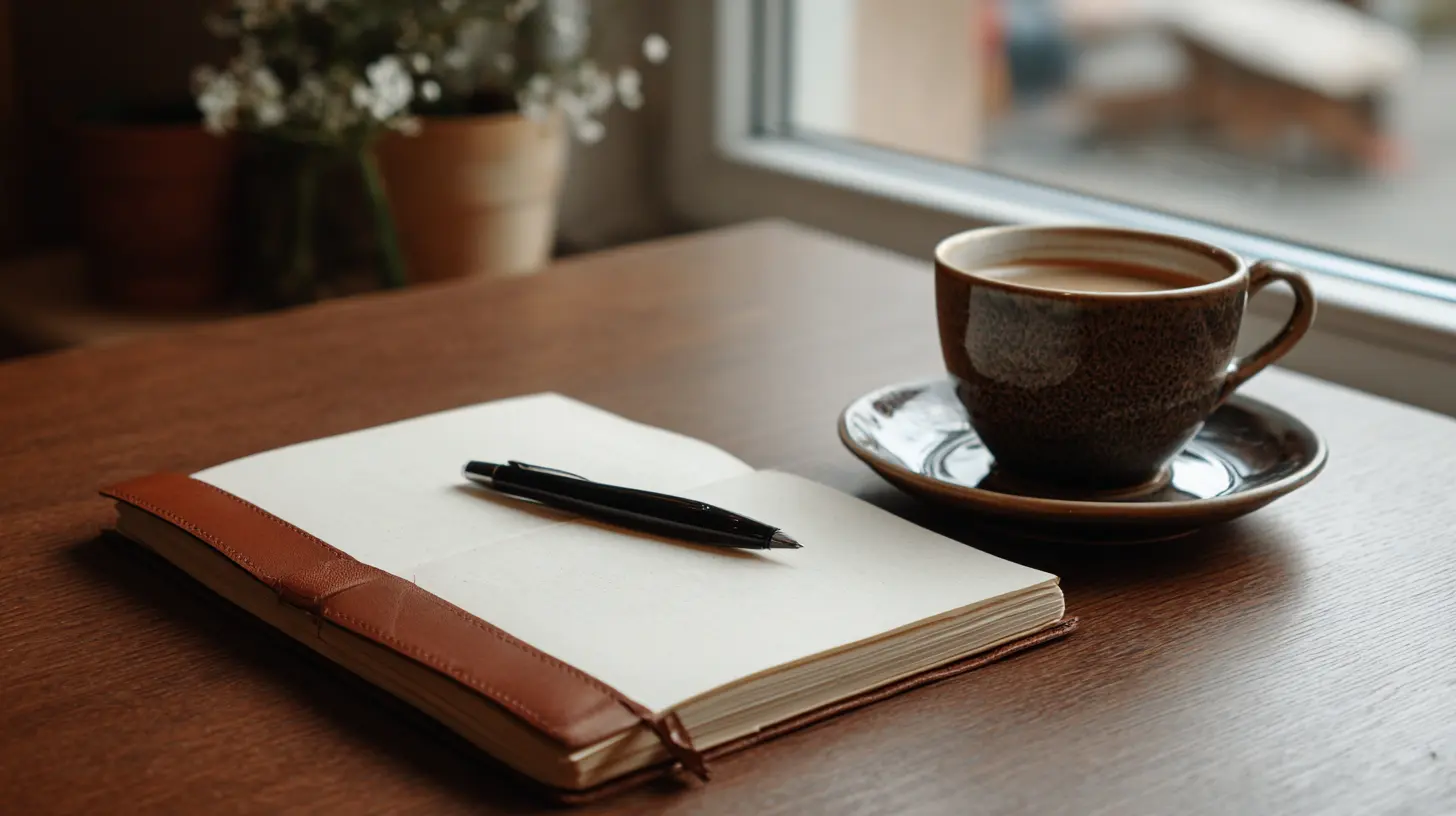
The “Unsent Letter” Technique for Social Anxiety
Raise your hand if you’ve ever replayed a conversation in your head for hours, analyzing every word you said. Yeah, me too. Social anxiety is a beast because it thrives on uncertainty. Did I offend them? Should I have said that? What if they’re mad? Here’s where the unsent letter comes in—a journaling hack that’s equal parts catharsis and clarity.Here’s how it works: Write a letter to the person (or situation) that’s causing you anxiety. Don’t hold back. Tell them how you feel, what you wish you’d said, and even what you’re afraid of. But here’s the rule: you never send it. This letter is for your eyes only. Why? Because the act of writing releases the emotional pressure without the risk of real-world consequences. It’s like screaming into a pillow, but with better grammar.
Studies show that this technique reduces cortisol levels and improves emotional regulation. By 2027, therapists will likely prescribe it as a standard tool for social anxiety. And the best part? You can do it anywhere—on your lunch break, in the car, or even in the bathroom stall (no judgment). The key is to write without editing. Let the anger, the fear, the embarrassment flow. Then, when you’re done, you can either keep the letter, burn it, or tear it up. The physical act of destroying it can be surprisingly liberating.
The Gratitude Paradox: How Thankfulness Tames Fear
I know, I know—gratitude journaling sounds like something a wellness influencer would push on Instagram. But hear me out. There’s a reason it’s been around for centuries. Gratitude isn’t about ignoring your problems; it’s about retraining your brain to see the full picture. Anxiety narrows your focus to threats. Gratitude widens it to include resources, support, and small wins.Here’s the paradox: when you’re anxious, the last thing you feel is grateful. But forcing yourself to list three things you’re thankful for—even if it’s just “I have a warm bed” or “my cat is cute”—triggers the release of dopamine and serotonin. These are the “feel-good” neurotransmitters that counteract cortisol. By 2027, gratitude journaling will be a staple in schools, workplaces, and even hospitals.
But don’t just write a boring list. Make it vivid. Instead of “I’m grateful for my friend,” write “I’m grateful that Sarah listened to me ramble for an hour without checking her phone.” See the difference? The specific details anchor the feeling. And when your brain revisits that memory later, it’s easier to access the calm state. This isn’t woo-woo; it’s neuroplasticity—your brain’s ability to rewire itself based on repeated thoughts.
The “One Sentence” Rule for Overthinkers
Let’s be honest: some days, journaling feels like a chore. You sit down with grand intentions, but your mind goes blank. Or worse, you start writing and end up with a novel about your childhood trauma when you just wanted to vent about traffic. That’s where the “One Sentence” rule comes in. It’s the laziest, most effective way to journal, and by 2027, it might be the only method you need.Here’s the rule: you are only allowed to write one sentence per day. That’s it. No more, no less. This forces you to distill your anxiety into its purest form. For example: “Today I felt anxious because I thought my boss hated my presentation, but then I realized she’s just stressed about her own deadlines.” Boom. You’ve identified the trigger, challenged the thought, and found perspective—all in one breath.
Why does this work? Because anxiety loves complexity. It thrives on tangents and “what ifs.” By limiting yourself to one sentence, you starve the anxiety of oxygen. You’re saying, “No, brain, we’re not going down that rabbit hole. We’re stating the fact and moving on.” Over time, this trains your brain to be more concise and less reactive. By 2027, this method will be a go-to for busy professionals, parents, and anyone who hates “homework.”
The Future of Journaling: Tech, Community, and Privacy
By 2027, journaling won’t just be a solo act. It will be a hybrid experience—part analog, part digital, part communal. Imagine a world where your journal app syncs with your therapist’s notes (with your permission, of course). Or where you can join a “silent writing” group where people write together in a virtual room, sharing only if they choose. The loneliness of anxiety often makes it worse; knowing others are writing alongside you can be oddly comforting.But here’s the catch: privacy will be paramount. By 2027, expect more encrypted journaling apps that don’t sell your data. Paper journals will also see a resurgence, as people crave a break from screens. The key is choice. You might use a digital voice journal for on-the-go rants and a leather-bound notebook for deep reflection. The medium doesn’t matter; the intention does.
And let’s not forget the role of AI. By 2027, AI-powered journaling prompts could analyze your writing patterns and suggest personalized exercises. For example, if you always write about work stress, the app might prompt you to write about a time you overcame a professional challenge. This isn’t about replacing human insight—it’s about augmenting it. But remember, the magic isn’t in the tool; it’s in your willingness to show up.
A Final Challenge: Start Tonight
Look, I’m not here to sell you on a $50 journal with fancy quotes on the cover. You can use a napkin, a Notes app, or a sticky note. The point is to start. Anxiety doesn’t wait for the perfect moment, and neither should you. By 2027, the simple act of writing could be as routine as brushing your teeth—a non-negotiable part of your mental hygiene.So, here’s my challenge to you: tonight, before you doom-scroll or replay that awkward conversation for the hundredth time, grab something to write on. Set a timer for three minutes. Write whatever comes to mind. No rules. No judgment. Then, close the notebook and go to sleep. Tomorrow, do it again. By 2027, you might look back and realize that the pen was mightier than the panic all along.
all images in this post were generated using AI tools
Category:
Journaling For Mental HealthAuthor:

Eliana Burton
Discussion
rate this article
2 comments
Rose McGlynn
Journaling offers a practical approach to manage anxiety. By reflecting on thoughts and emotions, individuals can gain clarity and develop healthier coping strategies over time.
July 16, 2026 at 3:39 AM
Eliana Burton
Absolutely! Journaling is a powerful tool for understanding our emotions and finding calm amidst chaos. It really can lead to healthier habits.
Giselle Middleton
Journaling can be a powerful tool for managing anxiety. By simply putting thoughts on paper, you can gain clarity and perspective. It's a way to process emotions and release tension. The strategies in this article offer practical steps anyone can take to incorporate journaling into their daily routine for better mental health.
May 13, 2026 at 2:40 PM
Eliana Burton
Thanks for sharing your thoughts! Journaling truly does offer that clarity and emotional release, making it a valuable tool for managing anxiety. Glad you found the strategies helpful!