How Climate Anxiety Might Contribute to Depression in Youth
11 October 2026
A teenager in California watches wildfire smoke turn the sky orange for the third consecutive autumn. A college student in Bangladesh reads that parts of their coastal hometown may be underwater within their lifetime. A fifteen-year-old in Germany lies awake calculating whether having children is ethical given the planet's trajectory. None of these young people has experienced a single climate disaster firsthand, yet each carries a persistent, low-grade dread that colors their daily life.
That dread has a name. Climate anxiety, sometimes called eco-anxiety, describes distress rooted in awareness of environmental degradation and its uncertain future. It is not a diagnosis. It is not a disorder. It is a rational response to a genuinely uncertain threat. But rational or not, it can interact with a young person's developing mind in ways that push them toward depression, and understanding that pathway matters for parents, educators, and clinicians alike.

What Climate Anxiety Actually Is
Before examining how climate anxiety might contribute to depression, it helps to separate it from related but distinct experiences.Climate anxiety is not the same as general anxiety. General anxiety often involves worry that is disproportionate to a situation, or that persists after a stressor has passed. Climate anxiety, by contrast, tracks a threat that is real, ongoing, and scientifically documented. A young person who worries about rising seas is not catastrophizing. They are reading the evidence correctly.
It is also not the same as grief, though the two overlap. Ecological grief refers to mourning what has already been lost: a favorite forest, a familiar coastline, a species that no longer appears in local waters. Climate anxiety looks forward. Grief looks back. Many young people carry both at once, and the combination is particularly heavy.
What makes climate anxiety distinctive is its temporal structure. Most fears have an endpoint. A test ends. An illness resolves. A conflict cools. Climate change does not offer that relief. It is chronic, cumulative, and unbounded. For a developing brain still learning to regulate threat responses, a threat with no clear resolution is unusually difficult to metabolize.

Why Youth Are Especially Vulnerable
Adolescents and young adults are not simply smaller versions of adults. Their brains are undergoing significant reorganization, particularly in regions governing emotional regulation, impulse control, and long-term planning. The prefrontal cortex, which helps a person weigh consequences and modulate fear, continues maturing into the mid-twenties. Meanwhile, the amygdala, which generates emotional reactions, is highly active.This mismatch means young people often feel threats intensely before they have the cognitive tools to contextualize them. A thirty-five-year-old might read a climate report and think, "This is serious, but here is what I can do." A fifteen-year-old might read the same report and feel swallowed by it.
There are other factors specific to this generation:
- Developmental idealism. Adolescents are wired to care about justice and the future. Climate change violates both.
- Identity formation. Young people are asking who they are and what kind of life they will build. Climate uncertainty destabilizes those answers.
- Limited agency. Minors cannot vote, cannot change national policy, and often cannot choose where they live. They are asked to inherit a problem they did not create and cannot independently solve.
- Digital saturation. Social media amplifies climate content, including graphic imagery and doom-laden commentary, often without context or coping strategies.
The result is a population that is both more aware of the threat and less equipped to act on it. That gap between awareness and agency is where depression can take root.

The Pathway From Anxiety to Depression
Depression does not arrive overnight. It develops through a series of psychological and behavioral shifts, and climate anxiety can trigger several of them simultaneously.Learned Helplessness
Psychologist Martin Seligman's work on learned helplessness showed that when individuals repeatedly encounter situations they cannot control, they eventually stop trying, even when opportunities to change the situation appear. Climate anxiety can produce a similar effect. A young person who feels that recycling, protesting, and voting are all futile may generalize that helplessness to other areas of life. Schoolwork feels pointless. Relationships feel temporary. Effort feels foolish.The key word is feels. The situation may not actually be hopeless. But the perception of hopelessness is what drives depressive withdrawal.
Rumination and Anticipatory Grief
Anxiety often fuels rumination, the repetitive, passive focus on distressing thoughts. A teenager might replay the same questions night after night: Will there be a future? Should I bring a child into this? What is the point of planning a career?Rumination is a well-established risk factor for depression. It does not solve problems. It deepens them, because the mind rehearses the threat without generating resolution. When the threat is climate change, which has no simple resolution, rumination can become a permanent mental loop.
Loss of Anticipated Future
Depression in youth frequently involves a collapsed sense of the future. Young people who cannot imagine themselves in a positive future state are at elevated risk. Climate anxiety directly attacks that imagination. If the future looks uninhabitable, the motivational architecture that sustains goal-directed behavior begins to crumble.This is not melodrama. It is a logical consequence of a worldview in which long-term planning appears irrational.
Social Withdrawal and Alienation
Many young people report that adults in their lives dismiss their climate concerns. Parents may say, "Don't worry about it." Teachers may avoid the topic. Politicians may treat it as abstract. This invalidation is corrosive. It teaches young people that their deepest fears are not worth discussing, which leads to withdrawal, isolation, and the kind of loneliness that feeds depression.Moral Injury
Some youth experience what psychologists call moral injury: distress resulting from witnessing or participating in actions that violate deeply held values. Living in a high-consumption society while knowing that consumption contributes to ecological harm can create a chronic sense of complicity. That guilt, when unprocessed, can curdle into self-blame and depressive inertia.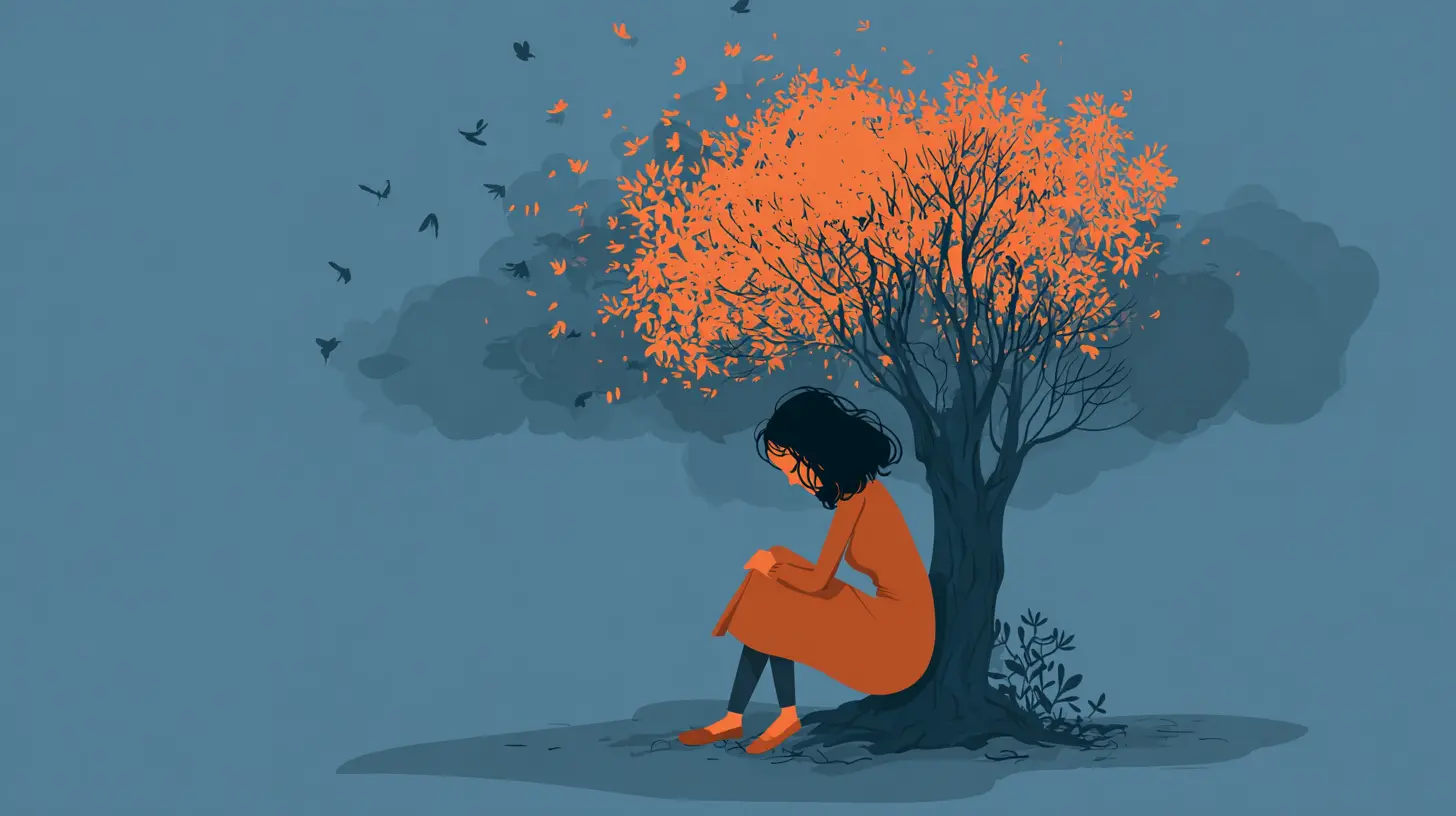
What the Research Suggests Without Overstating It
It is important to be precise here. The research on climate anxiety and youth depression is growing but not yet definitive. Studies have found associations between climate distress and depressive symptoms in adolescents and young adults across multiple countries. Surveys consistently show that a substantial proportion of young people report climate-related worry that interferes with daily functioning.What these studies cannot yet fully establish is causation. It is possible that climate anxiety contributes to depression. It is also possible that pre-existing depression makes a young person more vulnerable to climate distress. Most likely, the relationship is bidirectional, with each amplifying the other.
This matters for how we respond. If the relationship is bidirectional, then treating depression alone will not resolve climate anxiety, and addressing climate anxiety alone will not cure depression. Both need attention.
Common Mistakes Adults Make
Well-meaning adults often respond in ways that unintentionally worsen the problem. Recognizing these patterns is the first step toward changing them.Dismissal
Telling a young person "You're overreacting" or "It won't be that bad" does not calm them. It isolates them. The message they hear is that their perception is wrong and their feelings are unwelcome.Doom Confirmation
The opposite error is agreeing with the worst-case scenario. An adult who says, "You're right, we're doomed" may feel honest, but they offer no pathway forward. Despair is not solidarity.Premature Optimism
Cheerful reassurance, such as "Technology will fix it" or "Scientists will figure it out," often reads as denial. Young people are often better informed than the adults reassuring them, and they know when they are being placated.Outsourcing Responsibility
Adults sometimes tell youth that it is their generation's job to solve the crisis. This places an impossible burden on people with the least power and the most developmental vulnerability.Treating It as Purely Clinical
Climate anxiety is not simply a chemical imbalance. It is a response to a real-world condition. Treating it only with medication or generic cognitive techniques, without acknowledging its source, can feel invalidating.
What Actually Helps
Effective responses operate on multiple levels: individual, relational, and systemic. No single intervention is sufficient.Validate the Concern Without Endorsing Despair
The first move is to acknowledge that the fear is reasonable. "You're not crazy for worrying about this. A lot of people who understand the science feel the same way." This normalizes the experience without pretending the threat is imaginary.Then, gently separate the concern from the conclusion. Worry is appropriate. Hopelessness is not the only logical response to worry.
Restore a Sense of Agency
Agency does not require solving climate change. It requires doing something that feels meaningful within one's sphere of influence. This might mean joining a local environmental group, participating in a community garden, advocating for school policy changes, or simply reducing personal waste in ways that align with the young person's values.The action matters less than the experience of acting. Agency is a muscle. It strengthens with use.
Build Emotional Literacy
Young people benefit from learning to name what they feel. Is it fear? Grief? Anger? Guilt? Each emotion points toward a different need. Fear seeks safety. Grief seeks acknowledgment. Anger seeks change. Guilt seeks repair.When emotions are named, they become more manageable. When they remain unnamed, they blend into a diffuse heaviness that resembles depression.
Encourage Connection
Isolation worsens both anxiety and depression. Connection with peers who share the concern, with mentors who model constructive engagement, and with nature itself can be protective. Time outdoors, particularly in green spaces, has been associated with reduced stress and improved mood.Set Boundaries Around Information
Constant exposure to climate news, especially through social media algorithms that prioritize outrage and catastrophe, can intensify distress without increasing useful knowledge. Young people can benefit from choosing when and how they engage with climate information, rather than absorbing it passively throughout the day.This is not avoidance. It is pacing. A person cannot sustain effective action if they are constantly flooded.
Seek Professional Support When Needed
When climate anxiety contributes to persistent low mood, sleep disruption, loss of interest in activities, or thoughts of self-harm, professional help is warranted. Therapists trained in cognitive behavioral therapy, acceptance and commitment therapy, or eco-focused approaches can help young people develop coping strategies without minimizing the reality of the threat.Medication may be appropriate in some cases, but it should not be the only response. Depression rooted in existential concern needs more than symptom management.
When Interventions Should Be Used Carefully
Not every strategy works for every young person, and some can backfire if applied poorly.- Activism can be empowering, but it can also lead to burnout if a young person ties their entire self-worth to political outcomes.
- Mindfulness can reduce anxiety, but for some people, sitting quietly with distressing thoughts intensifies rumination rather than calming it.
- Optimism can be motivating, but forced positivity can feel dishonest and deepen alienation.
- Peer support groups can be validating, but if the group lacks facilitation, it can devolve into collective despair.
The guiding principle is fit. What helps one adolescent may harm another. Adults should remain curious about what is working and adjust accordingly.
A Balanced View of the Path Forward
Climate anxiety is not a disease to be cured. It is a signal that something is wrong. The goal is not to eliminate the signal but to prevent it from becoming paralyzing.For some young people, the most helpful response is action. For others, it is rest. For many, it is a combination: meaningful engagement balanced with deliberate recovery. There is no universal prescription.
What matters most is that young people are not left alone with their fear. Depression thrives in silence and isolation. It recedes when fear is spoken, heard, and met with both compassion and practical support.
The climate crisis is real. So is the pain it causes. So, too, is the capacity of young people to endure, adapt, and contribute, provided the adults around them take their distress seriously and help them find footing on unstable ground.
all images in this post were generated using AI tools
Category:
Depression AwarenessAuthor:

Eliana Burton