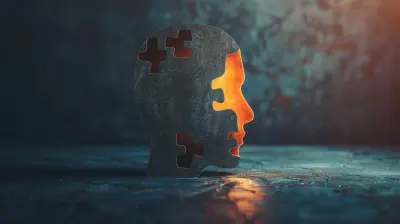
Beyond Intelligence Tests: Understanding Multiple Intelligences in Development
17 November 2026
The concept of intelligence extends far beyond what traditional tests measure. For decades, standardized tests have dominated the methodology used to assess human potential, but they often fail to capture the full spectrum of abilities individuals possess. This perspective shifts dramatically with Howard Gardner's theory of multiple intelligences, which proposes that intelligence is not a single entity but rather a collection of various modalities. Understanding these multiple intelligences can significantly influence educational practices and personal development strategies, making it a vital area of exploration.

The Foundation of Multiple Intelligences Theory
Howard Gardner's Contribution
In 1983, psychologist Howard Gardner introduced his theory of multiple intelligences in his book "Frames of Mind." Gardner identified eight distinct intelligences, asserting that individuals have unique combinations of these intelligences that shape how they learn, think, and behave. The intelligences Gardner identified are:1. Linguistic Intelligence: The ability to use language effectively. Think writers, poets, and speakers.
2. Logical-Mathematical Intelligence: The capacity for deductive reasoning, problem-solving, and mathematical calculation. This intelligence is prominent in scientists and mathematicians.
3. Spatial Intelligence: The ability to visualize and manipulate spatial relationships. Artists, architects, and navigators often excel in this area.
4. Musical Intelligence: The capacity to discern pitch, rhythm, and timbre. Musicians and composers typically demonstrate high musical intelligence.
5. Bodily-Kinesthetic Intelligence: The ability to use one's body effectively. Athletes, dancers, and craftsmen often exhibit strong bodily-kinesthetic intelligence.
6. Interpersonal Intelligence: The capacity to understand and interact effectively with others. Teachers, social workers, and leaders often thrive in this intelligence.
7. Intrapersonal Intelligence: The ability to understand oneself, including one's feelings, motivations, and desires. This intelligence is crucial for personal reflection and self-awareness.
8. Naturalistic Intelligence: The ability to recognize and categorize plants, animals, and other aspects of the natural world. Naturalists and biologists typically excel in this area.
Gardner later considered the possibility of a ninth intelligence, existential intelligence, focused on deep questions about existence.
Implications of Multiple Intelligences
Gardner's theory challenges the traditional view of intelligence as a singular, quantifiable attribute. It emphasizes that everyone possesses a unique blend of intelligences, which can influence how they process information and interact with the world. This understanding has profound implications for education, psychology, and personal development strategies.
The Role of Multiple Intelligences in Education
Personalized Learning
One of the most significant applications of Gardner's theory is in education. Recognizing that students have different intelligences allows educators to tailor their teaching methods to accommodate diverse learning styles. For example, a lesson on ecosystems might include:- Linguistic Intelligence: Assigning reading and writing tasks about the ecosystem.
- Logical-Mathematical Intelligence: Involving problem-solving exercises related to the ecosystem's dynamics.
- Spatial Intelligence: Using diagrams and models to represent the ecosystem visually.
- Musical Intelligence: Incorporating songs or rhythms that relate to ecological concepts.
Such an approach not only engages students but also fosters a deeper understanding by allowing them to process information in ways that resonate with their specific intelligences.
Common Mistakes in Implementation
While the theory offers valuable insights, educators often misinterpret its application. Some common mistakes include:- Overgeneralizing: Assuming a student excels in one intelligence without considering the blend of multiple intelligences they may possess.
- Neglecting Core Curriculum: Focusing too heavily on non-traditional intelligences at the expense of fundamental skills in reading, writing, and mathematics.
- Lack of Assessment: Failing to assess students' intelligences comprehensively can lead to ineffective teaching strategies.
To mitigate these pitfalls, educators should strive for a balanced approach, integrating multiple intelligences while ensuring foundational skills are not neglected.

The Impact of Multiple Intelligences on Personal Development
Self-Understanding and Growth
Understanding one's unique blend of intelligences can lead to greater self-awareness and informed personal growth. For instance, an individual who recognizes strong interpersonal intelligence may pursue careers in counseling, teaching, or team leadership. In contrast, someone with high intrapersonal intelligence might focus on solitary professions or roles that require deep self-reflection.Strategic Career Choices
Individuals can make more informed career choices when they acknowledge their intelligences. A naturalistic intelligence may lead someone to a career in environmental science, while someone with strong bodily-kinesthetic intelligence might thrive in sports or dance. recognizing these intelligences can help individuals seek out environments that foster their strengths, increasing job satisfaction and performance.Overcoming Limitations
While the theory of multiple intelligences encourages a focus on strengths, it is essential to recognize and address limitations. Individuals might struggle with certain intelligences, such as logical-mathematical or spatial intelligence. Understanding this can prompt individuals to seek additional training or support in these areas, ultimately leading to more balanced skill sets.
Practical Applications of Multiple Intelligences in Everyday Life
Parenting and Family Dynamics
Parents can leverage the concept of multiple intelligences to nurture their children's development. For instance, recognizing a child's musical intelligence might lead parents to provide early exposure to musical instruments or singing activities. Similarly, a child with strong bodily-kinesthetic intelligence could benefit from engaging in sports or dance classes.Workplace Dynamics
In professional settings, understanding multiple intelligences can enhance teamwork and collaboration. Teams composed of individuals with diverse intelligences can approach problems from multiple angles, leading to more holistic solutions. For example, a project might benefit from the creativity of someone with high spatial intelligence, the analytical skills of someone with logical-mathematical intelligence, and the interpersonal skills of another team member.Community Engagement
Multiple intelligences can also inform community initiatives. Programs that cater to various intelligences can foster inclusivity and participation. For instance, community centers might offer art classes for individuals with spatial intelligence, music workshops for those with musical intelligence, and gardening programs for individuals with naturalistic intelligence.Critiques of Multiple Intelligences Theory
Scientific Validity
While Gardner's theory has gained popularity, it has faced critiques regarding its scientific validity. Some scholars argue that the intelligences are not distinct entities but rather facets of a single intelligence. This criticism raises questions about the empirical support for Gardner's claims and whether the intelligences can be accurately measured or observed.Standardization Challenges
Another critique involves the practical application of the theory in standardized education systems. Many educational institutions remain tied to traditional metrics of success, making it challenging to implement a system that recognizes multiple intelligences fully. This disconnect can lead to frustration for both educators and students who wish to embrace a more holistic approach to learning.
Best Practices for Embracing Multiple Intelligences
Integrative Teaching Strategies
Educators should aim for an integrative approach that incorporates multiple intelligences within their lesson plans. This can be achieved through project-based learning, where students work on collaborative projects that allow them to engage with their strengths while also addressing other intelligences in the process.Continuous Assessment
Regular assessments of students' intelligences can help educators adjust their teaching methods effectively. Using tools like surveys, observations, and student reflections can provide insights into the intelligences present in the classroom.Professional Development
Teachers should be encouraged to pursue professional development opportunities focused on multiple intelligences. This can include workshops, conferences, or online courses that offer strategies for integrating the theory into their teaching practices.Fostering a Growth Mindset
Encouraging a growth mindset within the context of multiple intelligences is essential. Students should be taught that while they may have strengths in certain areas, they can also work to improve in others. This perspective fosters resilience and adaptability.Conclusion
The exploration of multiple intelligences offers a richer, more nuanced understanding of human potential than traditional intelligence tests provide. By recognizing and valuing the diverse ways individuals learn and interact with the world, we can create more effective educational systems and personal development strategies. This paradigm shift not only enhances individual growth but also fosters a more inclusive and supportive society.
all images in this post were generated using AI tools
Category:
Cognitive DevelopmentAuthor:

Eliana Burton